How to Distribute Your Podcast to All Major Platforms
“`html
Podcast Distribution Strategy for Organic Growth: Get Your Show Everywhere That Matters
Most B2B podcasters spend 80% of their energy on production and maybe 20% on getting the show in front of the right people. That ratio is backwards. A sharp podcast distribution strategy for organic growth is what separates shows that quietly compound listeners month over month from shows that plateau at 47 downloads per episode and stay there.
This guide walks you through the full distribution stack — hosting, RSS, directories, and the organic amplification layer most podcasters skip entirely. If your podcast is part of a larger content system designed to reduce paid ad dependency, this is where it starts earning its keep.
Hablemos claro: distribution is not a one-time setup task. It is an ongoing channel strategy.
Why Distribution Is the Lever Most Podcasters Ignore
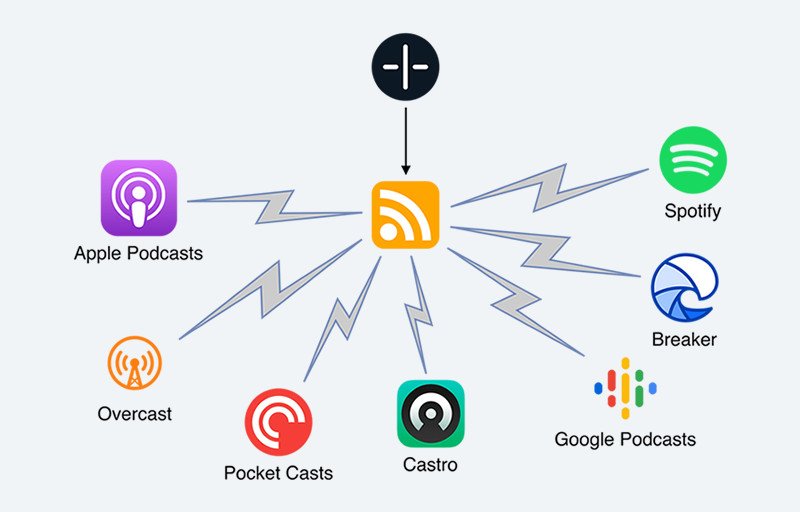
Podcast listening is fragmented. Your audience is split across Spotify, Apple Podcasts, YouTube Music, Pocket Casts, Overcast, and a dozen smaller apps. If your show only lives on one or two of those, you are leaving a measurable chunk of potential listeners on the table — listeners who will never search for you because you are simply not where they listen.
From an organic growth standpoint, broad distribution also feeds discoverability signals. Platforms like Spotify use engagement data — follows, saves, completion rates — to surface shows in recommendations. The more platforms you are on, the more data points accumulate, and the better your algorithmic lift across all of them.
There is also an SEO angle. Show notes, episode titles, and podcast descriptions indexed across multiple directories create additional organic search surface area. That matters if your podcast is part of a content marketing system built to replace paid ads with organic reach.
Step 1: Choose a Hosting Platform That Works for Distribution
Your podcast host stores audio files and generates the RSS feed that every directory reads. Choosing the wrong host creates friction at every subsequent step — broken feeds, missing analytics, clunky integrations.
Hosts Worth Considering in 2026
- Buzzsprout — clean analytics, straightforward directory submission workflow, good for teams new to podcasting
- Captivate — built with growth in mind, strong private podcast options for B2B use cases
- Libsyn — one of the oldest hosts, reliable uptime, preferred by larger production teams
- Podbean — solid monetization tools if that is part of your roadmap
- Spotify for Podcasters (formerly Anchor) — free tier, but understand that Spotify-exclusive features can limit cross-platform analytics visibility
What to Prioritize When Choosing
- Reliable uptime — a dropped feed breaks distribution across every directory simultaneously
- Episode-level analytics including consumption rate, not just download counts
- One-click or guided submission to Apple, Spotify, Google, and Amazon
- Custom domain support for your podcast website if you want branded show notes pages
Do not optimize purely on price. A $20/month host with clean analytics is a better business decision than a free host that makes it hard to see where your listeners are coming from.
Step 2: Configure Your RSS Feed Before You Submit Anywhere
Your RSS feed is the single source of truth for every directory. Whatever you put in that feed is what Spotify, Apple, and Amazon will display. Sloppy metadata here means sloppy presentation everywhere.
RSS Fields That Directly Affect Discoverability
- Podcast title — include your primary keyword naturally, avoid keyword stuffing
- Show description — write for humans first, but include terms your target audience searches; Apple indexes this
- Category and subcategory — choose the most specific accurate fit; this affects browse placements on Apple Podcasts
- Cover art — 3000x3000px minimum, legible at small sizes, no excessive text
- Episode titles and show notes — these are individually indexed; treat each one like a micro SEO asset
- Explicit rating — flag correctly or risk automatic filtering on family-friendly settings
One 2026 update worth noting: Apple Podcasts now weighs show note quality more heavily in search rankings than it did two years ago. Episode descriptions that read like a thoughtful summary — rather than a bullet list of timestamps — perform better. Write show notes the way you would write a blog intro, not a table of contents.
Step 3: Submit to Every Major Directory Systematically
Submission is not complicated, but it requires patience. Most directories take 24–72 hours to approve a new show. Do this before your launch date, not the morning of.
Tier 1 — Submit First, Non-Negotiable
- Apple Podcasts — still the largest directory by catalog; heavily used by iOS users and professionals
- Spotify — largest by active listeners globally as of 2026; also surfaces podcast content in music recommendation flows
- Amazon Music / Audible — growing fast among Prime users; underutilized by B2B shows, which creates less competition
- YouTube Music — Google has been pushing podcast content into YouTube search results; video RSS import is now supported
Tier 2 — Submit Within the First Week
- iHeartRadio
- Pocket Casts
- Overcast
- Podcast Index — open-source directory that feeds several third-party apps
- TuneIn
- Deezer
Most hosts have a one-click submission feature for Tier 1 platforms. Use it. For Tier 2, you submit your RSS URL manually through each platform’s podcast submission page. Bookmark them, batch the work in one afternoon, and you are done.
Step 4: Build the Organic Amplification Layer
This is where most podcast distribution guides stop. It is also where most B2B podcasters leave the most growth on the table. Submitting to directories gets you available. Organic amplification gets you found.
Treat Each Episode as a Content Asset, Not Just an Audio File
Every episode should produce at least three derivative content pieces: a written blog post built around the episode’s core idea, two or three short-form social clips (60–90 seconds, captioned), and a LinkedIn text post that shares a single insight from the episode without requiring anyone to listen first. This compound approach means each episode earns organic reach through search, social algorithms, and direct shares — not just podcast directory placement.
Si tu podcast no está generando tráfico orgánico más allá del feed de audio, estás dejando la mitad del trabajo sin hacer.
Optimize Episode Titles for Search, Not Just Curiosity
Clever episode titles are fine for established audiences. For organic growth, titles that match how your audience searches work better. Compare “Episode 47: The Messy Middle” versus “How B2B Founders Validate Messaging Without a Marketing Team.” The second one can be found by someone who has never heard of your show. The first one cannot.
Create a Podcast Page on Your Website That Earns Links
A dedicated podcast landing page with full episode transcripts, embedded audio players, and structured show notes gives search engines something to index. Over time, that page accumulates backlinks, which strengthens your domain authority — the same domain authority that supports your blog rankings and organic content system as a whole. Your podcast and your blog are not separate channels. They are the same organic asset in different formats.
Ask for Reviews Strategically, Not Generically
Apple Podcasts reviews still influence how prominently new shows appear in New and Noteworthy placements. Ask for reviews at a moment of genuine value — right after a listener hears something that made them pause and think — not at the top of every episode. The quality and recency of reviews matters more than volume in 2026.
Step 5: Track Distribution Performance and Adjust
A distribution strategy without measurement is just wishful thinking. Track these metrics monthly, not just at launch.
- Downloads by platform — tells you where your audience actually is, so you know where to invest promotion effort
- Consumption rate per episode — if listeners drop off at the 40% mark consistently, the issue is content structure, not distribution
- Follower growth rate by directory — followers matter more than downloads for algorithmic placement
- Website traffic from podcast pages — measures whether your show is contributing to organic search performance
- Inbound leads or demo requests attributed to podcast — the metric that actually matters if this is a B2B growth channel
Review these numbers quarterly and make one concrete adjustment each time. Maybe Spotify is driving 60% of your listeners but you have been promoting the Apple link in your newsletter. Flip the link. Small optimizations compound.
Distribution Is Infrastructure. Organic Growth Is the Strategy.
Getting your podcast onto every major platform is table stakes — it is the infrastructure layer that makes everything else possible. The actual growth happens in the organic amplification work: content repurposing, SEO-driven episode titles, a website that earns search traffic, and a show that is genuinely worth sharing.
If your podcast is part of a broader effort to build an organic content engine that reduces your dependence on paid advertising, the distribution strategy outlined here is one component of a larger system. The other components — blog content, SEO architecture, lead nurturing — work together with your podcast to create compounding organic reach over time.
That full system is what we build at Social Peak Media. Learn how the Content Marketing System works and how a podcast fits into an organic growth strategy designed for B2B founders and CMOs who are done paying to rent attention they could own.
Ready to build a content system that grows without paid ads? Talk to our team and we will show you exactly where your podcast fits in.
By Jose Villalobos
“`