Why Visual Storytelling Is the Future of Content Marketing
“`html
Visual Storytelling Content Marketing Strategy: How B2B Brands Win Organic Attention in 2026
Most B2B content looks the same. A wall of text, a stock photo, a generic CTA. Founders and CMOs pour budget into it, get middling results, and wonder why the pipeline stays dry. Here’s what the data keeps confirming: the brands that grow organically aren’t just publishing more — they’re communicating differently. A deliberate visual storytelling content marketing strategy is the difference between content that gets skimmed and content that gets shared, cited, and converted.
This isn’t about making things pretty. It’s about using narrative structure and visual language to move a buyer from “I’ve never heard of you” to “I trust you enough to talk.” That’s the job. Everything else is decoration.
What Visual Storytelling Actually Means (and What It Doesn’t)
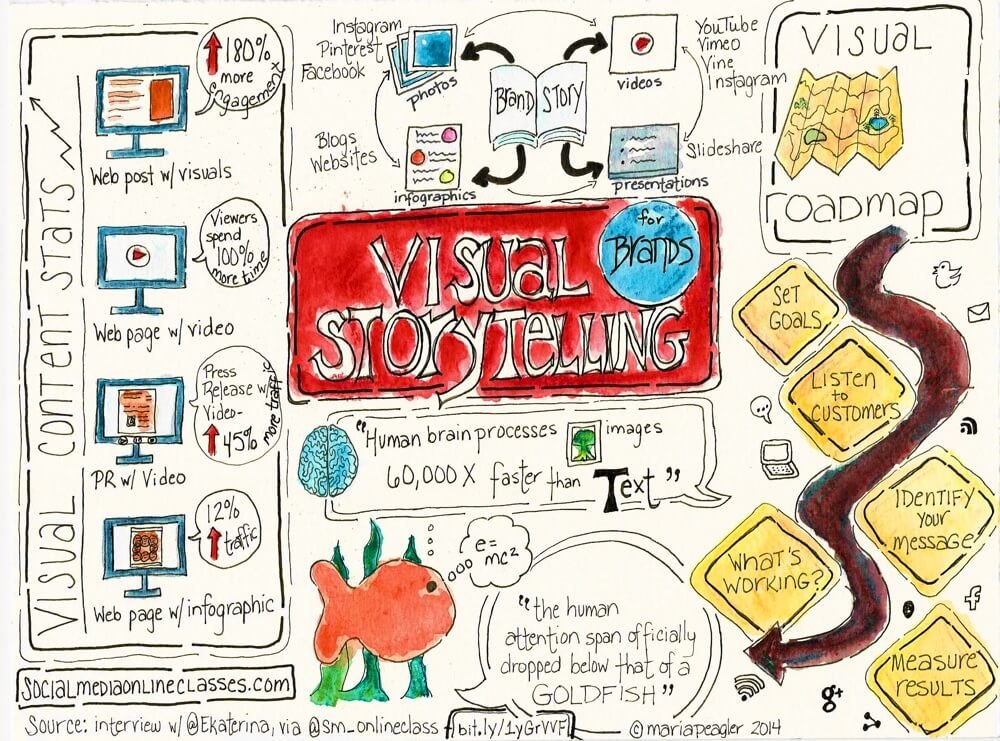
Visual storytelling is the practice of pairing imagery, video, data visualization, and design with a clear narrative arc — so your audience experiences your message rather than just reading it. The key word is narrative. Dropping a chart into a blog post isn’t visual storytelling. Showing a customer’s before-and-after journey — the real friction, the turning point, the outcome — with supporting visuals that make the arc undeniable? That is.
The distinction matters for B2B specifically. Complex products, long sales cycles, multiple stakeholders — these conditions make buyers more skeptical, not less. A story with visual proof dissolves skepticism faster than any feature list. It gives the CFO and the end user a shared emotional reference point before your sales team ever gets on a call.
Visual storytelling also isn’t a format. It’s a content layer you apply across formats — blogs, case studies, LinkedIn posts, landing pages. You can do it with a single well-chosen photograph and two honest sentences. Or with a six-panel infographic that walks a prospect through the exact problem your product solves. The format follows the story; the story doesn’t follow the format.
Why This Strategy Compounds While Paid Ads Decay
Paid ads stop the moment the budget stops. That’s not an opinion — it’s arithmetic. A visual storytelling content marketing strategy, built into an organic blog and content system, compounds over time. A case study you publish today will surface in search results in 2027. An infographic that explains a complex process can earn backlinks for years. The asset appreciates; the ad depreciates.
This is the core logic behind our content system b2b pillar“>replacing paid ads with an organic content system — and visual storytelling is what makes that system sticky. Text-only content can rank. But content that combines strong narrative with purposeful visuals earns longer time-on-page, more social shares, and higher return visit rates. Those behavioral signals feed the algorithm. The algorithm rewards visibility. Visibility builds trust. Trust closes deals. Sin chamullo — that’s just how the funnel works when you build it right.
Four Visual Storytelling Formats That Actually Move B2B Buyers
1. The Customer Journey Video (60–90 Seconds)
Not a product demo. Not a testimonial reel. A short, structured narrative: here’s the problem the customer was living with, here’s the moment they decided something had to change, here’s what happened after. Faces, real environments, specific numbers. Under two minutes. This format performs because it mirrors how buyers think — they’re not shopping for features, they’re shopping for a version of themselves that has already solved the problem.
2. Process Infographics With Editorial POV
Generic infographics summarize information. Good ones take a stance. If your company believes a certain process is broken, show it — visually, step by step — and then show the alternative. The editorial angle is what earns shares and links. CMOs forward things to their teams when the content confirms or challenges a belief they already hold. Neutral infographics get saved to a folder and forgotten.
3. Data-Driven Visual Posts for LinkedIn
In 2026, LinkedIn’s algorithm continues to favor native content with high early engagement. A single stat — visualized cleanly, with a two-sentence founder commentary below it — consistently outperforms long-form text posts for cold-audience reach. The visual stops the scroll. The commentary earns the follow. The follow builds the audience you’d otherwise have to pay to reach.
4. Annotated Screenshots and Teardowns
Underused and underrated. Take a real example — a competitor’s landing page, a bad email, a flawed report — and annotate it with honest observations. This format signals expertise immediately. It’s concrete, it’s opinionated, and it gives the reader something they can apply today. For B2B audiences who are tired of vague thought leadership, a good teardown is oxygen.
How to Build a Visual Storytelling Content Marketing Strategy That Holds Up
Strategy without structure is just intention. Here’s a practical framework CMOs and founders can actually operationalize — not a 47-step content calendar, but a working logic.
- Start with the buyer’s emotional state, not your product features. What does your ideal customer feel at 11pm when a problem isn’t solved? That’s your narrative starting point. Every visual asset should connect back to that emotional reality.
- Define your visual language before you create anything. Color palette, typography, photography style, illustration approach. Inconsistency in visual identity breaks trust at the subconscious level. Buyers notice, even when they can’t articulate why.
- Build visual assets into your editorial calendar, not after it. If the visual is an afterthought, it will look like one. Map the story arc first — what’s the tension, what’s the resolution, what proof supports it — then decide which visual format best carries that arc.
- Repurpose with intention. A well-built case study has at least five visual storytelling assets inside it: a video clip, a pull-quote graphic, a before/after data visualization, a LinkedIn carousel, and a featured image for the blog post itself. Extract them systematically.
- Measure what matters for trust, not just traffic. Time on page, scroll depth, return visits, inbound link acquisition. These tell you whether your visual storytelling is building authority. Pageviews alone tell you almost nothing about whether buyers trust you.
What 2026 Changes About This Strategy
AI-generated content has flooded search results. Claro — everyone with a subscription to a language model is publishing. That raises the floor and also raises the ceiling. Generic, visually bland content is now invisible. What cuts through is specificity, genuine perspective, and visual proof that a real team with real clients is behind the work.
Google’s 2025–2026 quality rater guidelines place increasing weight on Experience and Expertise signals — which means original visuals (screenshots, custom graphics, behind-the-scenes photography) carry more EEAT value than they did two years ago. A stock photo illustrates nothing. A screenshot from your actual client dashboard proves something. The bar for visual authenticity has gone up. Most brands haven’t adjusted yet. That gap is the opportunity.
AI tools also mean production costs for visual content have dropped significantly — custom illustrations, data visualizations, short video editing. Founders who were priced out of strong visual content in 2022 can now compete with enterprise creative teams on budget fractions. The constraint is no longer money. It’s strategy and editorial judgment.
The Organic Compounding Advantage
A visual storytelling content marketing strategy isn’t a campaign. It’s infrastructure. Every piece you build — every case study, every annotated teardown, every data visualization — is a permanent asset in your organic content system. It works while your sales team sleeps. It ranks while your paid ads pause. It builds the kind of authority that makes a prospect say, before they ever speak to you, “these people clearly know what they’re doing.”
That’s the replace-paid-ads thesis in concrete terms: stop renting attention. Build something that owns it. Visual storytelling is how you make that owned content worth stopping for.
If you want to see how this fits into a full organic content system — one designed to replace paid acquisition with compounding blog authority — our content system b2b pillar“>read the full breakdown here. It covers the architecture, the content types, and the sequencing that makes it work for B2B companies at scale.
Ready to build a visual storytelling content marketing strategy that doesn’t depend on ad spend? Talk to the Social Peak Media team — we’ll show you exactly what this looks like for your market.
— Jose Villalobos, Social Peak Media
“`