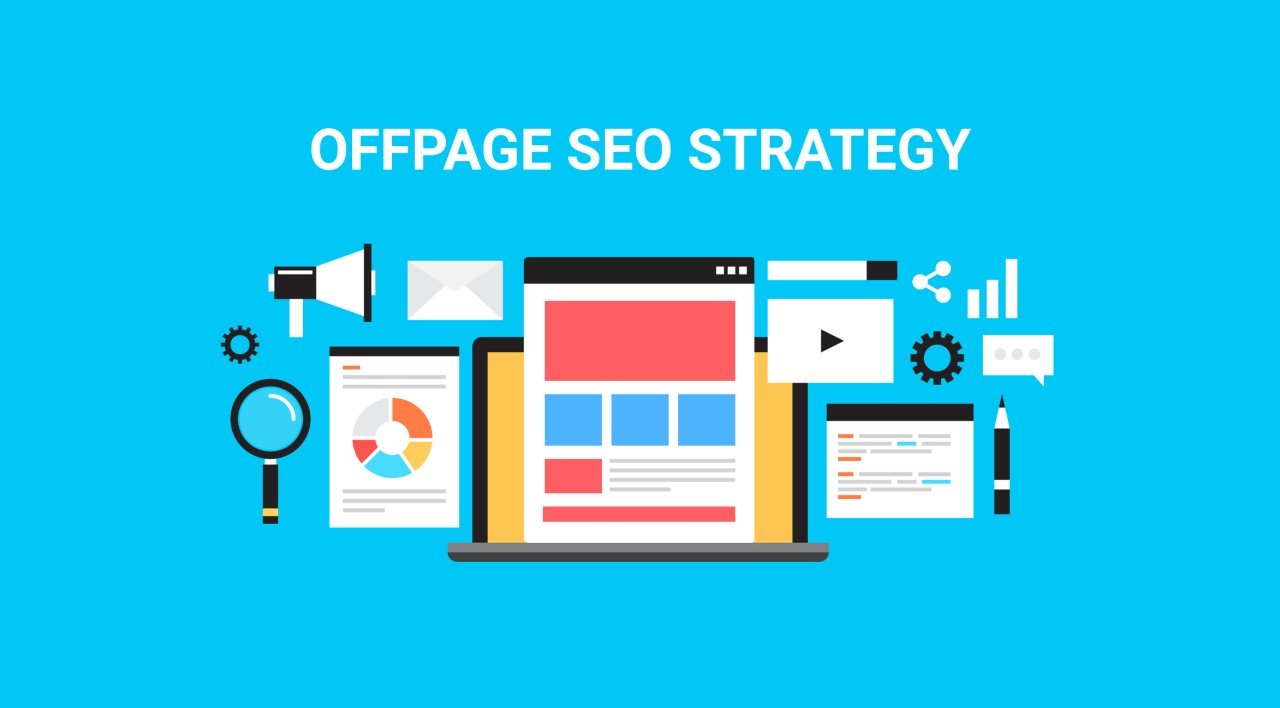
What is Off-Page SEO? A Comprehensive Guide for 2024
“`html
Off-Page SEO Backlinks & Ranking: What Actually Moves the Needle in 2026
Here’s the uncomfortable truth most SEO guides won’t tell you: you can publish the most technically perfect page on the internet and still watch competitors outrank you month after month. Why? Because Google doesn’t just read your content — it reads what the rest of the web thinks about you. That’s the core of off-page SEO, and in 2026, it’s more decisive than ever for CMOs and founders trying to build durable organic growth.
This guide breaks down how off-page SEO backlinks ranking actually works, why topical authority has changed the backlink game, and what a buyer-first strategy looks like when you stop chasing vanity metrics and start building real digital credibility.
What Off-Page SEO Actually Means (And What It Doesn’t)
Off-page SEO refers to every ranking signal Google collects about your site from outside your own domain. The most well-known signal is backlinks — hyperlinks from external websites pointing to yours. But off-page SEO also includes brand mentions (linked or unlinked), social signals, podcast appearances, digital PR, co-citations, and even the sentiment pattern of reviews across third-party platforms.
Think of it this way: your on-page SEO is your resume — structured, optimized, keyword-aligned. Your off-page SEO is your professional reputation — what peers, publications, and communities say when you’re not in the room. Both matter. But in competitive markets, reputation breaks the tie.
What off-page SEO is not: a link-buying scheme, a directory submission checklist, or a one-time campaign. Brands that treat it transactionally get short-term bumps and long-term penalties. Brands that treat it as authority-building compound their gains over time.
Why Off-Page SEO Backlinks Still Drive Rankings in 2026
Google’s 2024 core updates — confirmed by leaked internal documentation — reinforced that backlinks remain a primary ranking factor, but with a critical nuance: relevance and topical alignment now outweigh raw link volume. One contextually relevant backlink from an authoritative domain in your niche can deliver more ranking lift than fifty generic directory links.
This is where the relationship between off-page SEO and semantic SEO becomes impossible to ignore. Google’s systems increasingly evaluate whether your backlink profile reflects genuine topical authority — meaning the sites linking to you should themselves be relevant to your subject matter. A B2B SaaS company earning links from marketing publications, industry analysts, and niche forums signals something very different than the same company buying links from unrelated lifestyle blogs.
The algorithm has gotten better at reading that difference. Claro.
The Link Types That Actually Impact Off-Page SEO Backlinks Ranking
Not all backlinks are created equal. Here’s how to think about link quality in 2026:
- Editorial backlinks: Earned naturally when journalists, bloggers, or analysts reference your content as a source. Highest trust signal. These are the ones worth pursuing through digital PR and original research.
- Contextual niche links: Links embedded within topically relevant content on authoritative sites in your industry. Strong ranking signal because they reinforce topical alignment.
- Thought leadership citations: When your founder or CMO is quoted in industry roundups, podcasts transcripts, or case studies and linked back to your domain. Builds EEAT (Experience, Expertise, Authoritativeness, Trustworthiness) simultaneously.
- Resource page links: Legitimate “best tools” or “recommended reading” lists from curated niche sites. Still effective when relevance is tight.
- Guest post links: Valid when placed in genuinely high-quality publications relevant to your audience — not syndication farms.
- Unlinked brand mentions: Google can associate mentions of your brand name with your domain even without a hyperlink. These co-citation signals contribute to off-page authority and are increasingly trackable.
What you want to avoid: link schemes, PBNs (private blog networks), keyword-stuffed anchor text manipulation, and any tactic that prioritizes volume over context. Sin chamullo — these still get sites penalized.
Off-Page SEO and Topical Authority: Why They’re Inseparable Now
Google’s Helpful Content System and subsequent updates have pushed the algorithm toward evaluating sites as entities with defined areas of expertise — not just individual pages with keywords. This is the foundation of topical authority: the idea that Google rewards sites that demonstrate deep, consistent, interlinked knowledge around a subject cluster.
Here’s where off-page SEO backlinks ranking plugs directly into this framework. If your backlink profile consistently attracts links from within a specific topical ecosystem — say, B2B demand generation, or sustainable supply chain management — Google’s systems interpret that as external validation of your topical authority. Your off-page signals and your content architecture start working together as a unified trust signal.
This is why a scatter-shot link-building approach fails even when the links are high-DR. Earning twenty links from twenty unrelated domains in twenty different industries doesn’t build topical authority — it just adds noise. Earning ten links from highly relevant sources within your niche compresses your ranking timeline dramatically.
For a deeper look at how on-page content structure supports this, see our SEO Fundamentals pillar — it covers the technical and semantic groundwork that makes off-page signals land harder.
EEAT: The Off-Page Signal Google Has Been Doubling Down On
Google’s Quality Rater Guidelines center on Experience, Expertise, Authoritativeness, and Trustworthiness — collectively known as EEAT. While EEAT isn’t a direct ranking factor in the algorithmic sense, it shapes how Google’s systems evaluate page quality, and off-page signals are the primary mechanism through which EEAT is demonstrated externally.
What this means practically for CMOs and founders:
- Author authority matters. When your content is bylined by a named expert with a verifiable professional presence — LinkedIn, industry publications, speaking history — and that expert earns external citations, it boosts the page’s perceived EEAT.
- Brand authority accumulates. Consistent mentions and links from credible sources over time signal to Google that your brand is a legitimate, established entity in your space.
- Review signals count. Third-party review platforms (G2, Capterra, Google Business Profile) contribute to off-page trust signals, particularly for local and service-based businesses.
- Original data gets cited. Publishing proprietary research, surveys, or case studies is one of the highest-ROI off-page strategies because it generates editorial backlinks organically — the links you can’t easily buy.
A Practical Off-Page SEO Framework for 2026
Strategy without structure is just activity. Here’s how to approach off-page SEO backlinks ranking with a framework that compounds:
1. Audit Your Current Backlink Profile
Before building, understand what you’re working with. Use tools like Ahrefs, Semrush, or Majestic to identify your referring domains, anchor text distribution, and toxic link patterns. Flag anything that looks manipulative and consider disavowing if you’ve inherited a messy profile from previous agencies or tactics.
2. Map Link Opportunities to Your Topical Clusters
Every link-building effort should connect to a specific content cluster in your topical authority framework. If you’re publishing a cluster around “B2B email marketing automation,” your outreach targets should be email marketing publications, marketing operations communities, and SaaS review sites — not generic business blogs. Relevance is the multiplier.
3. Lead with Original Research and Data
The single most scalable off-page strategy in 2026 is creating content that journalists and bloggers need to cite. Annual industry surveys, benchmark reports, and original data studies generate editorial backlinks passively once distributed. One well-positioned study can earn dozens of high-quality links over twelve months.
4. Build Author Credibility Externally
Identify two or three subject matter experts at your company and systematically build their external presence: podcast appearances, contributed articles in niche publications, LinkedIn thought leadership that drives referral traffic. This isn’t just PR — it’s structured EEAT development that Google can verify.
5. Track Link Velocity and Anchor Text Ratios
Unnatural spikes in link acquisition trigger algorithmic scrutiny. A steady, consistent pace of link earning looks organic because it is organic. Similarly, monitor your anchor text distribution — over-optimized exact-match anchors are a red flag. Branded, naked URL, and partial-match anchors should dominate your profile.
What CMOs and Founders Should Stop Doing Immediately
A few patterns we see repeatedly that quietly kill off-page SEO performance:
- Outsourcing link-building to agencies that sell packages by volume without vetting relevance
- Ignoring unlinked brand mentions that could be converted to actual backlinks with a simple outreach email
- Treating off-page SEO as separate from content strategy instead of as the external validation arm of the same system
- Measuring success by Domain Rating alone instead of tracking ranking movement for target keywords and organic traffic to linked pages
The 2026 Reality: Off-Page SEO Is Authority Marketing
The brands winning organic search in 2026 aren’t the ones with the most backlinks. They’re the ones with the most relevant backlinks, the clearest topical authority signals, and the strongest EEAT footprint across the web. Off-page SEO backlinks ranking has always been about trust — but the algorithm has gotten sophisticated enough that you can’t fake trust at scale anymore.
For small and mid-size businesses competing against enterprise budgets, this is actually good news. Relevance and genuine expertise are harder to manufacture than volume. If you build your off-page strategy around real authority in a defined niche, you can outrank brands with ten times your domain age.
That’s the game worth playing.
Ready to build an off-page SEO strategy that actually compounds? At Social Peak Media, we help CMOs and founders connect content architecture, topical authority, and backlink development into one coherent growth system. Talk to our team and let’s map out what authority-first SEO looks like for your business.
— Jose Villalobos, Social Peak Media
“`