Repurposing Content for Multi-Platform Success: An In-Depth Guide for 2025
“`html
Repurposing Content for Multi-Platform SEO: The 2026 System That Replaces Paid Ads
Most B2B marketing teams are sitting on a goldmine they keep ignoring. They publish a strong blog post, watch it get decent traction for three weeks, then move on to the next piece. Meanwhile, the ad budget burns. Rinse, repeat.
That is the wrong loop. Repurposing content for multi-platform SEO is not a content hack — it is the operational backbone of a sustainable organic growth system. One well-built asset, distributed intelligently across platforms, can generate compounding traffic, backlinks, and pipeline without a single dollar in paid spend.
This guide breaks down exactly how to build that system in 2026, with structure, strategy, and the specific decisions that separate brands winning on organic from those still chasing clicks.
Si ya tienes el contenido pero no lo estás aprovechando, esto es para ti. Sin chamullo, claro.
And if you want to understand how repurposing fits inside a full organic growth engine, start with our pillar guide: Content Marketing System: Replace Paid Ads with Organic Blogs.
Why Repurposing Content Drives Multi-Platform SEO (Not Just Reach)
There is a common misconception here worth addressing upfront. Most marketers think repurposing is about reach — get the same message in front of more eyeballs. That is true, but it is the smaller half of the value. The bigger payoff is SEO compounding.
When you repurpose a core blog post into a YouTube video, a LinkedIn article, a podcast episode, and a structured FAQ page, you are not just distributing content. You are building a web of assets that all signal topical authority to Google around the same subject cluster. Each asset can rank independently for related long-tail queries. Each can earn its own backlinks. Together, they reinforce the domain authority of the original post.
This is why repurposing content for multi-platform SEO is a fundamentally different strategy than social media scheduling. You are not reposting. You are building infrastructure.
Three concrete SEO benefits compound over time:
- Keyword surface area expands. A single blog post targets one primary keyword. A video, an infographic, and a podcast episode each hit adjacent queries your blog may never rank for.
- Topical authority strengthens. Google’s Helpful Content updates reward sites that demonstrate deep, consistent expertise on a subject. Multiple formats covering the same topic from different angles send that signal clearly.
- Link acquisition becomes easier. Journalists, creators, and other publishers link to the format most useful to them. A data visualization gets linked differently than a written breakdown. More formats mean more link triggers.
The Content Assets Worth Repurposing First
Not every piece deserves the full treatment. Repurposing poorly performing content just spreads mediocrity across more channels. Before you build a distribution workflow, you need a triage system.
Look for three types of content to prioritize:
- Evergreen performers. Posts that consistently pull organic traffic six months or more after publication. These already prove search demand exists. Repurposing amplifies what Google already likes.
- High-engagement, low-traffic pieces. Content that resonates with readers who find it but does not rank well yet. Strong engagement signals quality. Repurposing into additional formats can generate the backlinks needed to push it up in rankings.
- Foundational thought leadership. Original research, frameworks, or strong editorial takes your brand owns. This content rarely goes viral on its own but earns long-term credibility when distributed across formats consistently.
Run a quarterly audit in Google Search Console. Sort by impressions, not just clicks. High-impression, low-click-through posts are telling you something: strong topical relevance, weak title or meta. These are also prime repurposing candidates — the demand is proven, the execution just needs sharpening across formats.
The 2026 Multi-Platform Repurposing Framework
The goal is not to be everywhere. The goal is to own the full search and discovery surface around your core topics. Here is how to structure that systematically.
Start With the Long-Form Blog Post as Your Content Core
Every repurposing campaign starts with one well-structured, deeply researched blog post targeting a primary keyword. This is your content core — the asset from which everything else is extracted. It needs to be strong on its own merits: original perspective, real examples, clear structure, and depth that justifies its length.
A 1,500-word post optimized for repurposing content for multi-platform SEO should include semantic variations, answer common questions directly, and link internally to related cluster content. Build it right once. Then extract.
Extract Into Platform-Native Formats
Each platform has its own content grammar. Adapting means rewriting for that grammar, not copy-pasting.
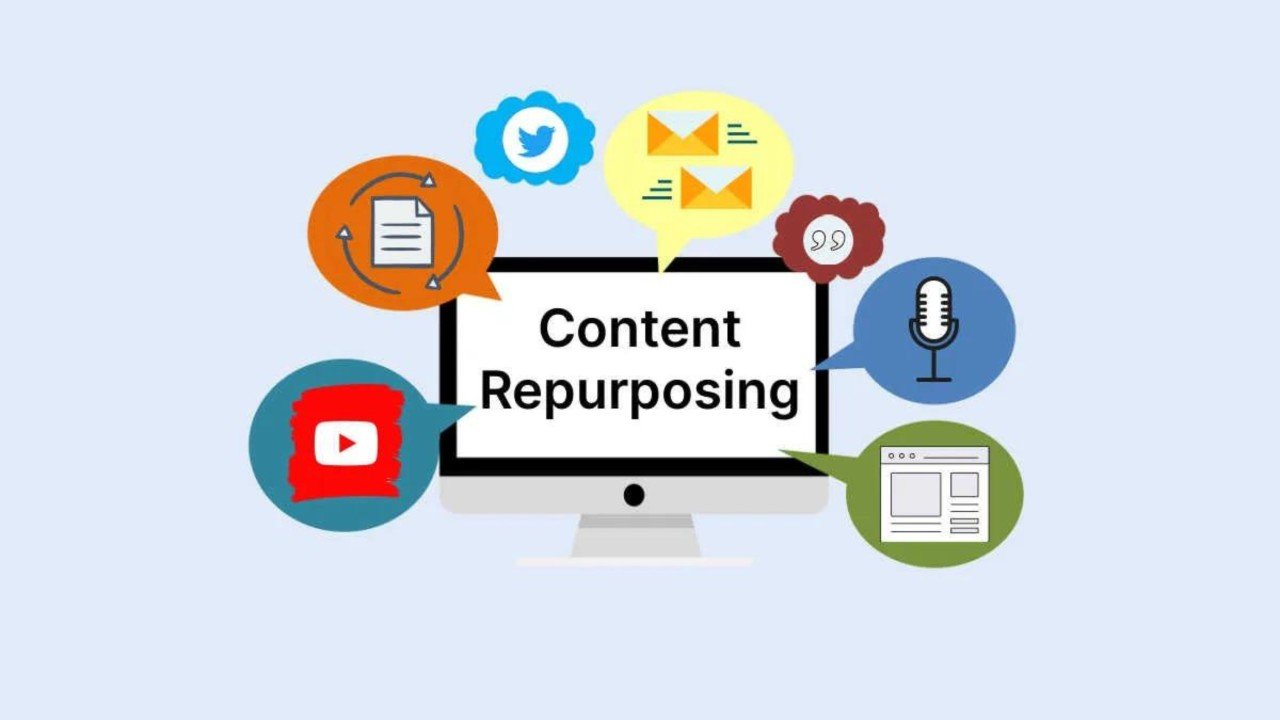
- LinkedIn long-form: Pull the core argument from your blog post and rewrite it as a first-person perspective piece. Drop the headers. Write in shorter paragraphs. Add a direct opinion in the opening line. LinkedIn rewards editorial voice and personal credibility. Link back to the full post in the first comment, not the body — the algorithm treats external links in the body as reach killers.
- Short-form video (YouTube Shorts, Instagram Reels, TikTok): Take one specific insight from the post — not a summary, one insight — and build a 60-90 second explanation around it. The best-performing B2B short-form video in 2026 looks like a founder or strategist talking directly to camera about a specific problem. No stock footage. No over-produced graphics. Credibility over production value.
- YouTube long-form: This is where SEO compound interest really kicks in. A 10-12 minute video covering the same topic as your blog post can rank independently in YouTube search and appear in Google’s video results. Transcribe the video. That transcript becomes a secondary blog post or an FAQ page with natural language that captures voice-search queries.
- Podcast episode: If you have a show, record a focused conversation expanding on the post’s core idea. Podcast content indexes in Google Podcasts and Apple, creates a listening audience segment your blog does not reach, and generates transcript content for additional SEO assets.
- Email newsletter: Distill the post into a three-paragraph email that leads with the most counterintuitive insight. Newsletter audiences skew high-intent. They are not discovering you — they already chose you. Give them the sharpest version of the idea and link to the full post for depth.
- Structured FAQ or glossary entry: Pull the questions your post answers and build a dedicated FAQ page or add to an existing glossary. These rank for featured snippets and People Also Ask boxes at a rate that long-form posts rarely match.
Build the Internal Link Architecture as You Go
Every repurposed asset that lives on your domain — FAQ pages, secondary blog posts from video transcripts, landing pages — should link back to the original post and to your pillar content. This internal link structure is not cosmetic. It is how PageRank flows through your site and how Google understands your content hierarchy.
A repurposing workflow without an internal linking plan is a missed SEO opportunity. Map it before you publish, not after.
EEAT in a Repurposed Content Strategy
Google’s Experience, Expertise, Authoritativeness, and Trustworthiness framework matters more in 2026 than it did two years ago. The rollout of AI-generated content at scale made human-credentialed perspective a differentiating signal, not just a nice-to-have.
When you repurpose content across platforms, you have a structural advantage here. A founder appearing in a video discussing the same topic covered in a bylined blog post, referenced in a podcast interview, and cited in a LinkedIn article — that is EEAT demonstrated through consistent, multi-format presence. Not claimed. Demonstrated.
This is why repurposing is not just an efficiency play. It is a trust-building system. Each format adds a layer of verification that the ideas come from real expertise, not a content factory.
Common Repurposing Mistakes That Kill SEO Value
A few patterns consistently undermine what should be a strong system:
- Duplicate content without canonical tags. If you republish a blog post verbatim on LinkedIn or Medium, you need a canonical tag pointing back to your original. Without it, you are creating a potential duplicate content issue that dilutes ranking signals.
- Summarizing instead of adapting. A LinkedIn post that summarizes your blog post offers nothing to someone who has already read it and nothing compelling to someone who has not. Adapt the idea for the platform — different angle, different format, same core insight.
- Ignoring platform-specific keyword behavior. YouTube has its own search algorithm. Pinterest has its own. Repurposing without doing lightweight keyword research for each platform leaves organic traffic on the table.
- Publishing everything at once. Stagger your repurposed assets over four to six weeks. This creates sustained topic signals across platforms and gives each asset time to gather its own engagement data before the next one drops.
Measuring What Actually Matters
Track repurposing performance across two dimensions: SEO impact and content efficiency.
For SEO impact, watch keyword ranking movement for the primary post over 60-90 days post-repurposing campaign. Monitor backlink acquisition — repurposed assets on external platforms often generate links back to the original. Track organic impressions in Search Console for both the primary post and any new pages created from repurposed assets like FAQ pages or transcript-based posts.
For content efficiency, calculate cost-per-asset across a repurposing campaign versus standalone creation. A single blog post repurposed into six assets at one-third the creation cost of six standalone pieces is the efficiency case for this system. Once you have that data, the conversation with leadership about organic versus paid shifts significantly.
Build the System, Not Just the Content
The brands pulling consistent organic pipeline in 2026 are not creating more content. They are operating smarter with what they already have. Repurposing content for multi-platform SEO is the mechanism that turns a content calendar into a compounding asset library.
One strong post. Six formats. Twelve months of organic surface area. That is the math that replaces a paid ad dependency.
If you are ready to build the full system — not just the repurposing layer but the editorial strategy, keyword architecture, and distribution workflow — read our complete guide: Content Marketing System: Replace Paid Ads with Organic Blogs.
Or if you want us to audit your current content library and identify your highest-leverage repurposing opportunities, reach out to the Social Peak Media team. We work with CMOs and founders building organic systems that actually scale.
— Jose Villalobos, Social Peak Media
“`