Leveraging AI to Automate and Optimize Social Media Strategy
“`html
AI Social Media Strategy Automation: The 2026 Playbook for CMOs and Founders
Most social media strategies fail quietly. Not because the content is bad, but because the execution is manual, the decisions are slow, and the data sits in dashboards nobody checks. AI social media strategy automation changes that equation — but only if you deploy it with intent, not just novelty. This is what serious operators need to know heading into 2026.
By Jose Villalobos | Social Peak Media
Why AI Social Media Strategy Automation Is No Longer Optional
Social platforms have outpaced human bandwidth. The average B2B brand manages five or more active channels, each with its own algorithm, content cadence, and audience behavior. Trying to optimize that manually is like navigating without GPS — you’ll get somewhere, but not efficiently.
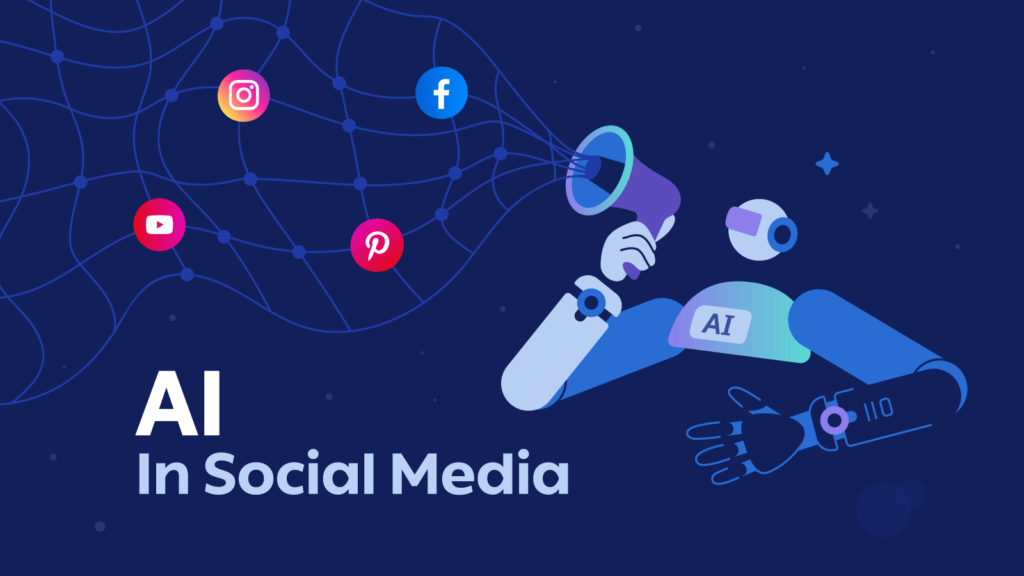
AI-driven automation layers machine learning, natural language processing, and predictive analytics on top of your existing workflows. The result: faster publishing decisions, sharper audience targeting, and content strategies that adapt in real time instead of waiting for a quarterly review.
According to a 2025 Sprout Social report, brands using AI-assisted scheduling and content optimization saw a 34% improvement in engagement rates versus those relying on manual posting alone. That gap will only widen in 2026 as platforms reward velocity and relevance.
Para los CMOs y fundadores que todavía están evaluando si esto vale la pena — ya no es una pregunta de si, sino de cómo. Sin chamullo.
What AI Actually Does in a Social Media Strategy
There’s a lot of noise around AI in marketing. Let’s cut through it. In the context of social media, AI earns its place across four operational layers:
- Content intelligence: Analyzing which formats, topics, and tones drive the highest engagement for your specific audience — not a generic benchmark audience.
- Scheduling optimization: Predicting peak windows for each platform and audience segment, then auto-scheduling accordingly.
- Ad targeting and creative testing: Running multivariate tests on copy and visuals, reallocating spend toward winners without waiting for human review cycles.
- Audience behavior prediction: Flagging shifts in follower sentiment, competitor activity, or trending topics before they become obvious to everyone else.
What AI does not do is replace editorial judgment. A founder’s point of view, a CMO’s positioning instinct, a brand’s cultural fluency — those still require humans. AI handles the data-heavy execution so your team can focus on the thinking that actually differentiates you.
The Automation Stack Worth Building in 2026
Not every AI tool belongs in your stack. The ones worth investing in share a common trait: they reduce decision latency without removing human oversight. Here’s what a lean, high-performance AI social media automation stack looks like for a mid-market B2B brand or growth-stage company:
1. Predictive Content Scheduling
Tools like Sprout Social, Hootsuite’s AI layer, and Buffer’s AI assistant analyze your historical performance data and audience activity windows to recommend — and in some cases automatically execute — optimal posting schedules. In 2026, the best of these tools sync across time zones for global audiences and adjust dynamically when platform algorithm updates shift engagement patterns.
2. AI-Assisted Copy Generation and Iteration
This isn’t about replacing your writers. It’s about giving them a faster starting point and a feedback loop. AI tools trained on your brand voice can generate first drafts for captions, ad copy, and thread openers. Your team edits and approves. The machine learns from what gets approved, improving suggestions over time.
The compounding effect here is real. After 90 days of training on your approvals, the gap between AI draft and publish-ready copy narrows significantly. That’s hours recovered per week, claro.
3. Real-Time Social Listening and Sentiment Analysis
Social listening used to mean checking a Mention dashboard once a day. AI-powered listening — through platforms like Brandwatch, Talkwalker, or Sprinklr — processes thousands of signals per hour, categorizes sentiment, and surfaces actionable alerts when your brand, competitors, or relevant industry topics spike in conversation volume.
For founders and CMOs, this is early warning intelligence. You find out a competitor launched something unexpected, or that a product complaint is gaining traction, before it becomes a PR problem or a missed positioning opportunity.
4. Paid Social Automation and Budget Optimization
Manual campaign management at scale is expensive and error-prone. AI budget optimization tools — native to Meta Advantage+ and LinkedIn’s predictive audiences, or third-party via Madgicx or Revealbot — continuously reallocate spend toward the ad sets, audiences, and creatives that are performing, and away from those that aren’t.
This matters especially for B2B brands running always-on LinkedIn campaigns. Small targeting refinements, auto-tested over thousands of impressions, compound into meaningful improvements in CPL within a single quarter.
Where Most Teams Get AI Automation Wrong
The failure mode isn’t adopting too much AI. It’s adopting AI without a strategy underneath it. Automation amplifies whatever system it’s plugged into — good or broken. If your content pillars are undefined, if your ICP is fuzzy, if your brand voice exists only in someone’s head, AI will produce faster versions of confused output.
Before you automate anything, answer three questions: Who exactly are you talking to? What do you want them to think, feel, or do after engaging with your content? And what does your brand actually sound like — not generically, but in a sentence you’d defend in a room full of your best customers?
Get those anchors right, and AI automation becomes a force multiplier. Skip them, and you’ll spend more time cleaning up AI-generated mediocrity than you would have spent posting manually.
Esta es la parte que la mayoría de los artículos no te dicen. La estrategia siempre primero.
EEAT in Practice: Building Trust Through AI-Augmented Social
Google’s emphasis on Experience, Expertise, Authoritativeness, and Trust (EEAT) has a direct implication for social strategy in 2026. Audiences — and algorithms — reward content that demonstrates real knowledge, real perspective, and real accountability. AI-generated content that reads like it could have been written by anyone, about anything, for anyone is the fastest way to erode the credibility you’ve spent years building.
The answer isn’t less AI. It’s more editorial ownership. Use AI to handle distribution mechanics, performance analysis, and first-draft volume. Use human expertise — specifically, named founders and CMOs with actual opinions — to inject the perspective and specificity that signals authority.
This is why the most effective AI social media strategies in 2026 combine automated infrastructure with human-led thought leadership. The machine keeps the engine running. The person in the seat steers.
A Practical 90-Day Framework for CMOs and Founders
If you’re building or rebuilding your AI social media strategy automation infrastructure, here’s a sequenced approach that works for resource-constrained teams:
- Days 1–30 — Audit and anchor: Audit your current content performance by platform. Define or sharpen your ICP, content pillars, and brand voice. Choose one AI tool per layer (scheduling, listening, copy) and integrate it with your existing stack.
- Days 31–60 — Test and train: Run AI-assisted content alongside your baseline. Don’t replace — compare. Let the tools learn from your approvals and rejections. Begin automating paid social budget allocation on your highest-volume campaigns.
- Days 61–90 — Scale and systematize: Identify the workflows where AI is consistently outperforming or accelerating human effort. Formalize those as standard operating procedures. Begin attributing content performance to specific AI-assisted decisions so you can prove ROI to your board or investors.
The Competitive Advantage Window Is Still Open — But Not for Long
Most B2B brands in the mid-market are still running social media operations that are 70% manual. That creates a real advantage for the CMOs and founders who move now — not because AI is magic, but because operational efficiency at scale compounds over time.
The brands that build disciplined AI social media strategy automation systems in 2025 and 2026 will have 18 months of performance data, trained models, and optimized workflows before their competitors figure out where to start. That’s a moat worth building.
For a deeper look at how this fits into your broader growth architecture, explore our CMO and Founder Growth Playbooks — built specifically for operators who need strategy that scales, not just tactics that trend.
Ready to Build Your AI-Powered Social Media Engine?
Social Peak Media works with CMOs and founders to design and implement social media strategies that combine human editorial authority with AI-driven execution. If you’re ready to stop managing social manually and start building a system that compounds, let’s talk.
“`