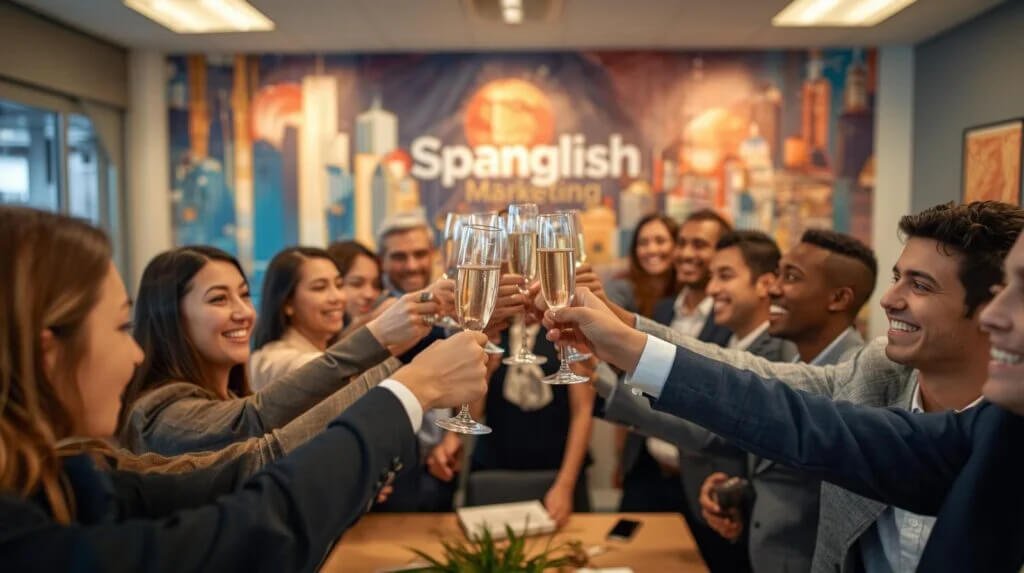
Spanglish Marketing: How Brands Win the US Latino Market
“`html
Spanglish Marketing for US Latino Audiences: How Smart Brands Win Where Others Guess
There is a language spoken by tens of millions of Americans that most marketing departments have never written a single line of copy in. No official dictionary. No grammar textbook. No standardized rules. And yet it is one of the most powerful trust signals a brand can deploy with the fastest-growing consumer segment in the United States.
It is Spanglish. And the brands learning to use it correctly are pulling away from competitors still debating whether to run a Spanish ad.
Spanglish marketing for US Latino audiences is not a translation shortcut or a gimmick. It is the most authentic register available for reaching the bilingual, bicultural Latino consumer — the largest, most digitally active, and most underserved segment of the US Hispanic market. If your brand is still treating Spanish and English as two separate switches, you are already behind.
What Spanglish Marketing Actually Is (and What It Is Not)
Spanglish is not broken Spanish. It is not bad English. It is a fully functional communication system that emerges naturally when bilingual speakers move between two languages in the same conversation, the same sentence, or even the same word. Linguists call this code-switching, and it is one of the most documented phenomena in bilingualism research — a marker of fluency, not deficiency.
Spanglish marketing is the practice of creating brand communications that blend English and Spanish naturally — through vocabulary, syntax, cultural reference, and code-switching — to connect with acculturated US Latinos who navigate both languages as a single fluid identity. It is not about sprinkling ¡Hola! onto an English ad and calling it multicultural. It is about reflecting how people actually talk.
The distinction matters commercially. A brand that translates a campaign into Spanish is targeting one behavior. A brand that mirrors how bilingual Latinos actually communicate is building cultural belonging — and that is what drives loyalty.
Who Speaks Spanglish and Why Your Marketing Strategy Needs to Know
Spanglish is primarily spoken by second- and third-generation Latino Americans who grew up in households where Spanish was the family language and English was the school, work, and street language. For this group, moving between the two is not an effort. It is simply how they think.
According to the Pew Research Center, 73% of US Latinos are bilingual. The majority of those under 40 are bicultural — equally at home in American mainstream culture and their Latino heritage. This segment is the most digitally active, most brand-aware, and most underserved by marketers who only know how to speak to them one language at a time.
The Numbers Behind the Spanglish Audience in 2025–2026
- 62.1 million Latinos currently live in the US, representing 18.7% of the total population (US Census Bureau, 2024 estimate).
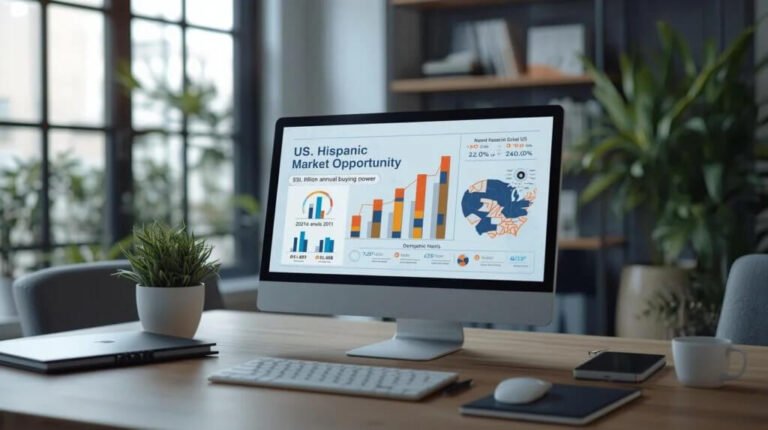
- US Latino purchasing power is projected to reach $3.4 trillion by 2026, making this community the third-largest economy in the Western Hemisphere if considered independently.
- 73% of US Latinos are bilingual, with the majority under 40 consuming content in both languages simultaneously across platforms.
- Latino adults aged 18–49 over-index on mobile usage, social media engagement, and short-form video consumption — the exact formats where Spanglish copy performs best.
- Brands that ran culturally resonant bilingual campaigns in 2024–2025 saw up to 2.4x higher brand recall among Latino audiences versus English-only equivalents, per Nielsen’s most recent multicultural intelligence reports.
These are not niche numbers. This is a mainstream consumer market that most brands are approaching with legacy assumptions about language preference. The opportunity gap is wide, claro.
Why Translation Alone Fails US Latino Audiences
Here is a perspective most agencies will not tell a CMO directly: translating your English campaign into Spanish is not multicultural marketing — it is multilingual laziness. It assumes that language is the only variable that changes between audiences, when in reality culture, identity, humor, aspiration, and community reference all shift simultaneously.
Bicultural Latinos do not consume media the way first-generation immigrants do. They are not looking for a Spanish version of an American ad. They are looking for a brand that gets them — one that understands the tension and the pride of living between two worlds, sometimes in the same sentence.
When Spanglish appears in a brand’s copy or campaign, it signals cultural fluency. It says: we are not translating at you, we are talking with you. That is a fundamentally different brand posture, and consumers notice. Sin chamullo, that distinction is what separates brands with real Latino loyalty from brands with Latino impressions.
How to Execute Spanglish Marketing Without Getting It Wrong
Executed carelessly, Spanglish marketing can read as patronizing or performative — the equivalent of a non-Latino executive putting on a sombrero for Cinco de Mayo. The difference between authentic and cringe is almost entirely a function of who is in the room when the campaign is built.
1. Hire Bicultural Creatives, Not Just Bilingual Translators
Spanglish is produced by people who live it. A translator produces accuracy. A bicultural creative produces resonance. The code-switching in effective Spanglish copy is never random — it follows real conversational logic. Certain concepts land better in Spanish (family, food, faith, home). Others land better in English (ambition, technology, career). Knowing which is which requires cultural knowledge, not dictionary access.
2. Match the Register to the Platform
Spanglish in a TikTok caption sounds different from Spanglish in a long-form email or a product landing page. On social, it should feel spontaneous — the way a bilingual friend texts. In branded content, it should feel intentional but natural. The syntax should never feel constructed. If a line of copy requires explanation, rewrite it.
3. Use Cultural Anchors, Not Cultural Stereotypes
Effective Spanglish marketing references the specific cultural touchpoints that bilingual Latinos actually share — not the generic imagery that has plagued Hispanic advertising for decades. Extended family dynamics, the immigrant parent narrative, the experience of translating for your abuela at the doctor’s office, the pressure of being the first in your family to go to college. These are real, resonant, and underused.
4. Test Within Community, Not Outside It
Before a Spanglish campaign goes to market, it should be reviewed by actual bilingual Latino consumers — not just approved by a Hispanic marketing consultant at the agency level. Focus groups, community listening sessions, and social listening on Latino Twitter/X and TikTok will tell you faster than any research deck whether the copy lands or falls flat.
5. Commit to Consistency, Not Campaigns
The biggest mistake brands make with Spanglish marketing is treating it as a seasonal activation — a Mes de la Herencia Hispana push in October, then back to English-only the other eleven months. Bicultural Latino consumers notice this. They remember which brands showed up in October and disappeared in November. Consistent bilingual presence builds trust. Periodic multicultural campaigns build skepticism.
The 2026 Landscape: Where Spanglish Marketing Is Heading
Several shifts are reshaping how brands should approach Spanglish marketing for US Latino audiences right now.
Generational replacement within the Latino market is accelerating. By 2026, the majority of US Latinos will be US-born. That means the dominant consumer profile is shifting away from first-generation Spanish-dominant immigrants toward second- and third-generation bicultural, Spanglish-fluent adults. Brands still building Hispanic strategy around Spanish-language TV and Spanish-language digital are optimizing for a shrinking audience.
AI-generated content is creating a trust deficit. Bilingual Latino consumers are increasingly sensitive to content that reads as machine-translated or culturally thin. Authentic Spanglish — the kind that requires real cultural knowledge — is becoming a stronger differentiator precisely because it is harder to fake at scale. Human creative intelligence wins here.
The creator economy is producing the best Spanglish content in the market. Latino creators on TikTok, YouTube, and Instagram are producing code-switching content that gets millions of views because it reflects real community language. Brands that partner with these creators — rather than trying to replicate the style in-house — are accessing an authenticity premium that paid media cannot manufacture.
Spanglish Marketing as a Cross-Border Strategy
Brands operating across the US and LATAM face a layered challenge: how do you maintain brand coherence across markets where the language, culture, and consumer identity shift significantly? Spanglish marketing offers an unexpected bridge. Campaigns built for bicultural US Latinos — with their dual-language, dual-culture framing — often resonate with LATAM consumers who aspire to or consume American cultural references.
This is not a universal rule, and it requires careful market-by-market calibration. But the strategic insight holds: brands that develop genuine Spanglish fluency in the US market build creative and strategic assets that can inform LATAM brand work in ways that purely English-first or purely Spanish-first strategies cannot. For a deeper look at how this plays out across the US-LATAM corridor, explore our Bilingual and Cross-Border Marketing pillar.
What CMOs and Founders Should Take From This
If you are a CMO or founder with a significant Latino consumer base — or one you want to build — the strategic question is not whether to invest in Spanglish marketing. The market data answers that. The real questions are operational:
- Do you have bicultural creative talent on your team or among your agency partners?
- Is your Hispanic marketing strategy built around the consumer your data shows, or the consumer your legacy assumptions assumed?
- Are you showing up in the channels where bilingual Latinos actually spend time — short-form video, Instagram, podcasts in both languages — or are you still allocating budget to Spanish-language TV?
- Is your Spanglish presence consistent across the year, or is it campaign-shaped around cultural holidays?
The brands answering these questions honestly are the ones building durable market share with a consumer segment that will represent over 20% of the US population by 2030. The brands still debating whether to run a Spanish ad are ceding ground they will not recover cheaply.
Spanglish marketing for US Latino audiences is not a tactic. It is a strategic orientation toward a consumer who has been underestimated by the market for decades and is now the most important growth demographic in American commerce.
Eso no tiene vuelta atrás.
Ready to Build a Bilingual Strategy That Actually Works?
At Social Peak Media, we work with CMOs and founders who are serious about connecting with US Latino and LATAM audiences — not just checking a multicultural box. If your brand is ready to move beyond translated campaigns and into genuine Spanglish fluency, let’s talk. We will show you exactly where your current strategy is leaving audience and revenue on the table.
By Jose Villalobos | Social Peak Media
“`