
Best Podcast Hosting Platforms for 2025: A Complete Guide
“`html
Best Podcast Hosting Platforms 2025 (And What Actually Matters Before You Pick One)
Most founders and CMOs treat podcast hosting like a commodity decision — pick whatever’s cheapest, upload your episodes, move on. That’s a mistake. Your hosting platform controls your RSS feed, your analytics, your monetization options, and how fast your show lands on Apple Podcasts or Spotify after you hit publish. Get it wrong and you’re fighting distribution problems six months in.
This guide covers the best podcast hosting platforms 2025 has to offer — not as a feature-dump list, but from the perspective of a B2B content team that needs the podcast to actually work as part of a larger organic content system. Si vas en serio con el contenido, esto importa.
One more thing before the list: if you’re using a podcast to replace or reduce paid ad spend, you need more than a hosting platform — you need a full content engine. We cover that in depth in our our content system b2b pillar“>Content Marketing System: Replace Paid Ads with Organic Blogs pillar. Worth reading alongside this.
What to Look for in a Podcast Hosting Platform (The Non-Obvious Version)
The basics — storage, bandwidth, uptime — are table stakes. Every credible platform in 2025 passes that bar. What separates platforms now is the stuff content teams actually argue about six months post-launch.
Analytics That Connect to Business Outcomes
Download counts are vanity. What you want: listener retention curves, episode-level drop-off data, geographic breakdown, and — if you’re running B2B content — the ability to correlate listener behavior with lead activity. Not every platform offers this depth. Know what you need before you commit.
RSS Portability
This one gets ignored until it hurts. If you ever want to switch platforms, your RSS feed needs to migrate cleanly. Some platforms make this easy. Others lock you in through proprietary feed structures that break redirects. Always check the migration policy before signing up.
Distribution Speed and Reliability
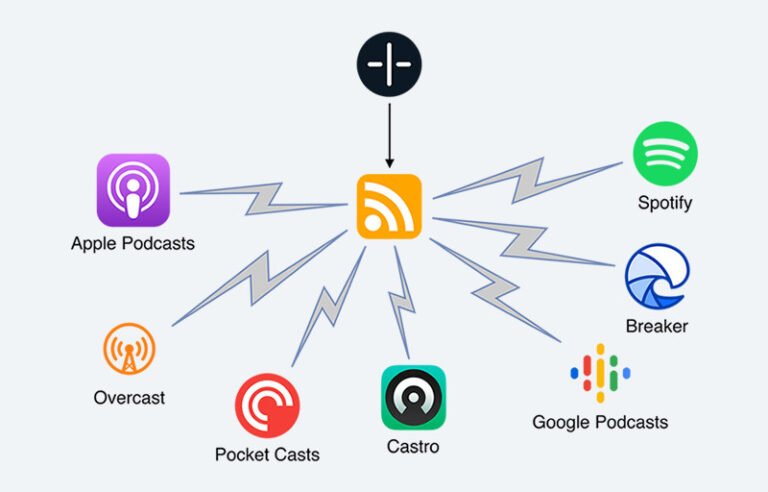
Auto-submission to Apple Podcasts, Spotify, Amazon Music, and iHeartRadio is standard now. What varies is how fast updates propagate and how gracefully the platform handles feed errors. For B2B podcasts targeting decision-makers, a broken episode the morning of a newsletter send is a real problem.
Monetization Architecture
If you plan to run dynamic ad insertion, sell premium content, or build a paid membership tier around your show, not all platforms support this equally. Some charge a revenue cut. Others give you the tools and step back. Know your monetization model first.
Integrations With Your Content Stack
In 2025, a podcast that doesn’t connect to your CRM, email platform, or website analytics is leaving data on the table. Look for native integrations or solid Zapier/webhook support.
The Best Podcast Hosting Platforms for 2025
Buzzsprout — Best for Teams Starting Out
Buzzsprout remains one of the cleanest entry points for teams that haven’t hosted a podcast before. The dashboard is genuinely easy to navigate, episode optimization is automated (it transcodes your audio to the right format and bitrate), and directory submission is largely hands-off. There’s a free plan, though it comes with a 90-day episode limit — enough to test the product, not enough to run a real show.
- Pricing: Free tier available; paid plans start at $12/month
- Best for: First-time podcasters, small teams, content marketers testing the format
- Watch out for: Analytics are functional but not deep — you’ll outgrow them if the show scales
Transistor — Best for Teams Running Multiple Shows
Transistor’s standout feature is unlimited podcasts per account. One subscription, multiple shows — which matters if you’re running a brand podcast, an internal show, and a customer-facing series simultaneously. Analytics are strong, the team-collaboration features work, and the private podcast option is genuinely useful for internal communications or paid communities.
- Pricing: Starts at $19/month
- Best for: Agencies, media companies, B2B brands running content at scale
- Watch out for: No free plan; you’re paying from day one
Buzzsprout vs. Transistor — The Real Difference
Both are reliable. The gap is scale. Buzzsprout is optimized for a single show with a lean team. Transistor is built for operators. If you’re a CMO managing a content portfolio, Transistor wins on infrastructure. If you’re a founder launching your first show this quarter, Buzzsprout gets you moving faster.
Captivate — Best for Growth-Focused B2B Podcasters
Captivate positions itself as a “growth-first” platform, and the pitch holds up. Built-in calls-to-action within the player, subscribe prompts, cross-promotion tools, and solid IAB-certified analytics make it a strong choice for teams that want the podcast to do real marketing work — not just exist. The dynamic content insertion feature lets you swap intros, outros, and mid-rolls without re-uploading episodes. Useful for evergreen content strategies.
- Pricing: Starts at $17/month
- Best for: Marketing teams, demand-gen focused content strategies
- Watch out for: The UI takes a few sessions to learn; not as immediately intuitive as Buzzsprout
Podbean — Best for Monetization
If ad revenue or listener support is part of your model, Podbean’s built-in monetization tools — patron program, dynamic ad marketplace, live streaming capabilities — are more developed than most competitors. It’s been around since 2006, which means the distribution relationships and stability are there. The interface is older, but the functionality runs deep.
- Pricing: Free plan available; unlimited plans from $9/month
- Best for: Creators and brands where podcast revenue is a direct goal
- Watch out for: Design feels dated compared to newer entrants; mobile app quality varies
Spotify for Podcasters (Anchor) — Best Free Option, With Caveats
Technically free, widely used, and deeply integrated with Spotify’s ecosystem. For a founder who wants to get a show live this week without spending anything, it works. The tradeoff: Spotify has direct platform interest in your audience data, RSS portability is less flexible than independent hosts, and the analytics, while improving, still lag behind dedicated platforms. Claro que es gratis — pero hay un precio que no aparece en la factura.
- Pricing: Free
- Best for: Solo creators, early-stage testing, Spotify-first content strategies
- Watch out for: Platform dependency, RSS control limitations, data ownership questions
Simplecast — Best for Larger Organizations
Simplecast targets professional media operations and enterprise teams. The analytics layer is one of the strongest in the market — Recast technology tracks unique listeners more accurately than download-based metrics alone. Team management features are mature. If you’re a media company or a large brand with a dedicated podcast team, Simplecast is built for that operating context.
- Pricing: Starts at $15/month; enterprise pricing available
- Best for: Media companies, enterprise brands, teams needing serious listener analytics
- Watch out for: Overkill (and overpriced) for solo podcasters or small teams
What Changes in 2026: Trends Worth Watching Now
Heading into 2026, three shifts are already visible in how the best platforms are developing. First, AI-assisted show notes, transcription, and SEO optimization are moving from paid add-ons to baseline features — if a platform doesn’t offer this by mid-2026, it’ll feel behind. Second, video podcasting infrastructure is accelerating. Spotify’s push into video-first podcast formats is forcing hosting platforms to handle video files, not just audio. If your content strategy includes YouTube distribution, hosting platform video support matters more than it did 12 months ago. Third, listener identity resolution — connecting anonymous downloads to known contacts in your CRM — is an emerging frontier. Early versions exist today; expect more sophisticated tooling by late 2025 and into 2026.
How to Choose: A Simple Decision Framework
- You’re launching your first show and want minimal friction: Buzzsprout
- You’re running multiple shows or managing a content team: Transistor
- Your podcast is a core demand-gen channel: Captivate
- You want to monetize directly through the platform: Podbean
- You need enterprise-grade analytics and team controls: Simplecast
- You want free and Spotify-first, trade-offs accepted: Spotify for Podcasters
The Hosting Platform Is Just One Piece
The best podcast hosting platform in 2025 is the one that fits your distribution model, your team’s workflow, and your content goals — not the one with the longest feature list. But hosting alone won’t build you an audience or generate leads. A podcast works best when it’s part of a connected content system: blog posts that extend episode topics, email that drives listens, and organic search that brings in cold audiences who’ve never heard of your show.
That’s the system we help B2B teams build. If you’re trying to reduce reliance on paid ads and build something with compounding returns, read how we approach that in our our content system b2b pillar“>Content Marketing System: Replace Paid Ads with Organic Blogs guide. Then come back and pick your platform with a clearer picture of where the podcast fits.
By Jose Villalobos — Content Strategist, Social Peak Media
“`