
On-Page SEO Best Practices for Local Businesses
“`html
On-Page SEO for Local Businesses: What Actually Moves the Needle in 2026
Most local businesses lose the search game before a competitor outranks them. They lose it on their own pages — weak title tags, missing schema, content that could belong to any city in any state. If you’re a founder or marketing lead trying to drive foot traffic and local leads from Google, this is the guide worth bookmarking. We’re covering the on-page SEO fundamentals for local businesses that still matter, plus what’s changed heading into 2026.
And if you want the broader strategic picture, start with our SEO Fundamentals pillar — this article lives inside that framework.
Why On-Page SEO Hits Different for Local Businesses
National brands optimize for volume. Local businesses optimize for intent. When someone searches “emergency plumber Austin” or “bakery near me open now,” they’re not browsing — they’re deciding. That’s a fundamentally different buyer moment, and your on-page signals need to reflect it.
Google’s local ranking algorithm weighs three things: relevance, distance, and prominence. On-page SEO directly controls relevance. Distance is fixed. Prominence takes time to build. That means your on-page work is the highest-leverage variable you can actually move this week.
Title Tags and Meta Descriptions: The Basics Most Businesses Still Get Wrong
Localized Title Tags That Signal Relevance Fast
Your title tag is the first editorial signal you send to both Google and the person scanning search results. For local businesses, leaving your city out of that tag is a missed opportunity — full stop. If you run a bakery in Austin, your title tag shouldn’t read “Fresh Bread and Pastries.” It should read something closer to “Best Bakery in Austin | Fresh Bread & Pastries Daily”. You’re telling Google where you operate and telling the user you’re theirs.
Keep it under 60 characters. Lead with the primary keyword when possible. And don’t keyword-stuff — Google rewrites titles it considers manipulative, and you lose control of your first impression.
Meta Descriptions That Actually Drive Clicks
Meta descriptions don’t directly move rankings. They move click-through rates, which influence rankings indirectly. For local businesses, that distinction matters more than most SEO guides admit. A higher CTR on a mid-ranking result signals to Google that your page deserves more visibility. Claro.
Write meta descriptions like a human wrote them — because someone will. Include your city, a concrete benefit, and a low-friction call to action. For that same Austin bakery: “Visit our Austin bakery for fresh-baked bread and pastries every morning. Order online or stop in — we’re open seven days a week.” Location, benefit, action. That’s the formula.
Schema Markup: The Signal Most Local Competitors Skip
Schema markup is structured data you add to your site’s code so search engines can interpret your content with precision — not just read it. For local businesses, LocalBusiness schema is non-negotiable. It tells Google your name, address, phone number, hours, service area, and business category in a language it doesn’t have to guess at.
In 2026, Google’s AI Overviews and local pack results increasingly pull from structured data to populate rich answers. If your schema is missing or misconfigured, you’re invisible in those surfaces — even if your content is solid. Getting this right is a compounding advantage, not a one-time fix.
What to include in your LocalBusiness schema:
- Business name — exactly as it appears on your Google Business Profile
- Address and phone number — consistent with every other citation across the web
- Business hours — including holiday variations where applicable
- Business category — use the most specific type available (e.g., Bakery, not just FoodEstablishment)
- Geographic coordinates — adds precision for map-based results
- Aggregate rating — if you have reviews, surface them in search results through ReviewSchema
Use Google’s Rich Results Test to validate your markup before publishing. Broken schema is worse than no schema — it creates conflicting signals.
Content That Earns Topical Authority in Your Market
Here’s where most local SEO advice stays shallow. Adding your city to a page title is hygiene. Building topical authority in your local market is strategy. And in 2026, with AI-generated content flooding search results, Google is rewarding sites that demonstrate genuine expertise and local context — what the SEO community calls EEAT: Experience, Expertise, Authoritativeness, Trustworthiness.
For a local business, that means your content needs to go beyond generic service descriptions. It needs to reflect actual knowledge of your market.
Practical ways to build local topical authority:
- Write about local specifics — reference neighborhoods, landmarks, seasonal patterns, and local events that only someone operating in that market would know
- Create location pages with real depth — not thin clones of a template with the city name swapped in, but pages that address why your service matters in that specific area
- Answer the questions your customers actually ask — use Google’s “People Also Ask” results, your own customer service conversations, and review themes to build FAQ content
- Show the humans behind the business — author bios, team pages, and first-person content build trust signals that AI-generated pages structurally cannot replicate
Sin chamullo: the businesses ranking in competitive local markets in 2026 are the ones treating their websites like editorial assets, not digital business cards.
NAP Consistency and Internal Linking: The Structural Work That Compounds
NAP stands for Name, Address, Phone number. Across your website, your Google Business Profile, Yelp, industry directories, and any other citation source, these three elements need to match exactly. Not approximately — exactly. Inconsistencies create trust signals that conflict, and Google resolves conflicts by reducing confidence in your listings overall.
Internal linking is the other structural lever that local businesses routinely underuse. Every service page should link to related pages. Your city-specific landing pages should link back to your core service pages. Your blog content should link to both. This isn’t just about user navigation — it’s about signaling to Google which pages carry authority and how your site’s content relates topically. This is the on-page expression of a Semantic SEO and Topical Authority framework: organized, interconnected, intentional.
Heading Structure and On-Page Copy: Relevance Signals Google Reads
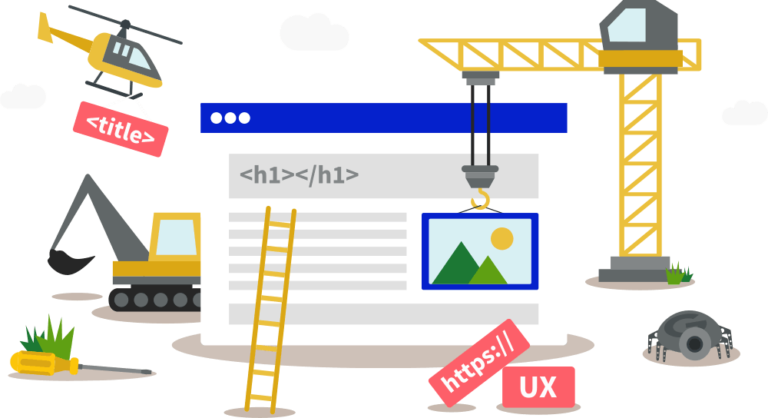
Your H1 should contain your primary local keyword naturally — not forced. Supporting H2s and H3s should address the subtopics a reader (and search engine) would expect to find on that page. Google’s understanding of content has grown sophisticated enough that keyword stuffing now actively hurts you. What it rewards is coverage: does this page fully address the topic it claims to be about?
For a local service page, that means addressing what you offer, who it’s for, where you serve, why you’re qualified, and what the next step is. Those aren’t just conversion elements. They’re relevance signals that tell Google your page deserves to rank for local searches with purchase intent.
2026 Update: AI Overviews and the Local Search Shift
Google’s AI Overviews — the AI-generated summaries appearing above organic results — are increasingly visible for local queries. The pages that get cited inside AI Overviews share common traits: clear structured data, strong topical coverage, authoritative authorship signals, and fast load times. On-page SEO for local businesses in 2026 isn’t just about the ten blue links. It’s about being the source Google’s AI trusts enough to quote.
That changes the game slightly. It means optimizing for comprehensiveness over brevity. It means building author credentials directly into your pages. And it means structured data is no longer optional — it’s the language AI search features speak.
Start Here: Your On-Page SEO Checklist for Local Businesses
- Title tags include city/region and primary keyword, under 60 characters
- Meta descriptions include location, key benefit, and a clear call to action
- LocalBusiness schema is implemented and validated with Google’s Rich Results Test
- NAP information is consistent across your site and all external citations
- H1 and H2 structure reflects the full topical scope of each page
- Content demonstrates local expertise — not just location keywords
- Internal links connect related service and location pages with intention
- Author or business credentials are visible on key pages to support EEAT
On-page SEO for local businesses isn’t complicated. But it is cumulative — every signal you get right compounds with the others. The businesses that win local search aren’t doing anything exotic. They’re doing the fundamentals with more care and more consistency than their competitors.
If you want to see how your current site stacks up — and where the highest-leverage opportunities are — reach out to the Social Peak Media team. We do this for B2B and local businesses every day, and we’re direct about what’s worth your time and what isn’t.
Written by Jose Villalobos, Social Peak Media
“`