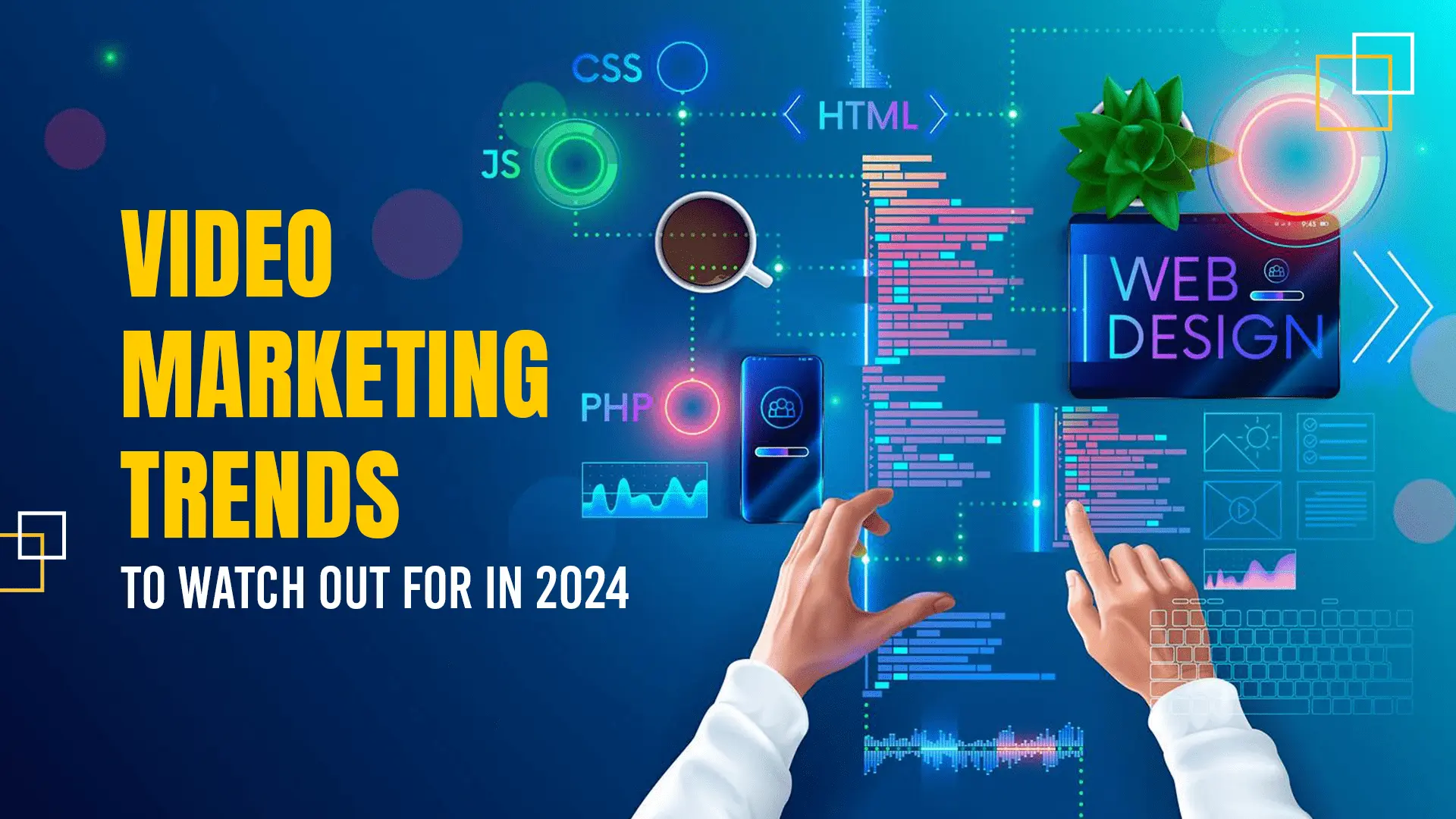
Video Marketing Trends: What’s Hot in 2024?
“`html
Video Marketing Trends 2024: Strategies That Still Drive Organic Growth in 2026
By Jose Villalobos
Here’s a question worth sitting with: if your paid ad budget disappeared tomorrow, would your content still bring in qualified buyers? For most B2B brands, the honest answer is no. And that’s exactly why understanding video marketing trends—not just as tactics but as part of a broader organic content system—matters more now than it did when these platforms first blew up.
The video landscape shifted hard in 2024. Short-form dominated. AI entered the production workflow. Personalization stopped being a nice-to-have. What’s interesting is that heading into 2026, those same forces haven’t slowed down—they’ve compounded. Brands that treated 2024’s shifts as strategic pivots are now sitting on durable organic pipelines. The ones who watched are still watching.
This is what the actual strategies looked like, what held up, and what CMOs and founders need to act on right now.
Short-Form Video: The Attention Economy’s New Standard
TikTok, Instagram Reels, YouTube Shorts—these platforms didn’t just popularize short-form video in 2024. They redefined viewer expectations across every content format. Audiences trained themselves to decide within three seconds whether a piece of content earned their next thirty.
That behavioral shift matters beyond the platforms themselves. It spills into how buyers watch product demos, how they engage with thought leadership, and how quickly they bounce from landing page videos that take too long to get to the point.
For B2B brands, the play isn’t necessarily dancing on TikTok. It’s understanding the underlying principle: front-load the value, cut the preamble, respect the viewer’s time. A 45-second behind-the-scenes clip showing your process, a quick founder take on an industry shift, a product walkthrough that skips the corporate intro—these outperform polished two-minute brand videos because they behave the way audiences now expect content to behave.
By 2026, short-form video has also become a legitimate top-of-funnel driver feeding longer organic content journeys. A Reel doesn’t close a deal. But it earns the click to the blog post that does. That’s the integration most brands still miss.
Personalized Video: Addressing the Buyer, Not the Crowd
Personalization in video stopped being experimental in 2024. Tools like Vidyard and Bonjoro made it operationally viable for teams without large production budgets to send video messages that addressed prospects by name, referenced their company, or reflected their specific pain points.
The results weren’t subtle. Sales teams using personalized video in outreach consistently reported higher reply rates than templated text sequences. Why? Because a video that greets someone by name—or that says “I noticed your team recently expanded into the enterprise segment”—signals that a real human being paid attention. En un mundo donde los compradores reciben cincuenta correos genéricos al día, eso se nota, claro.
- Account-based personalization: Video thumbnails with the prospect’s company name or logo embedded, proven to increase open rates significantly.
- Behavioral follow-ups: Triggered video emails sent after a prospect watches a demo or downloads a resource—meeting them exactly where they are in the journey.
- Sales-to-success handoffs: Personalized onboarding videos that reduce early churn by making new customers feel the relationship didn’t end at the signed contract.
Scaling this doesn’t require a video team. It requires a clear workflow and the willingness to spend four minutes recording something human instead of two minutes writing something forgettable.
AI-Assisted Production: More Content, Less Friction
One of the most consequential video marketing trends of 2024 was the maturation of AI production tools. Platforms like Runway, Synthesia, and HeyGen moved from novelty to utility. By mid-2024, marketing teams were using AI to generate video summaries from blog posts, create multilingual versions of existing content, and produce talking-head explainer videos without a camera in sight.
The strategic implication isn’t that AI replaces creative direction. It doesn’t. What it does is remove the production bottleneck that kept many B2B teams treating video as a quarterly initiative rather than a consistent content format.
Heading into 2026, the brands winning with AI-assisted video are the ones who established clear editorial standards first. The technology executes faster than ever. But garbage input still produces garbage output, just faster. The constraint has shifted from production capacity to content strategy—which means the editorial layer now matters more, not less.
Long-Form Video and the Trust-Building Play
Here’s the counterintuitive part of the short-form story: long-form video didn’t die. It specialized.
While short-form captured top-of-funnel attention, long-form video—think YouTube deep dives, recorded webinars, and documentary-style brand content—became the trust infrastructure for mid-to-late funnel buyers. A CMO evaluating a six-figure contract isn’t making that decision based on a Reel. They’re watching a 40-minute founder interview. They’re sitting through a case study walkthrough. They’re reviewing a recorded product demo with their team.
The 2024 insight that held up: short-form earns attention, long-form earns trust. Both are necessary. Neither replaces the other. The mistake is investing in only one.
This is also where video integrates most naturally with an organic content system. A long-form YouTube video on a high-intent topic functions like a blog post—it ranks, it compounds, it drives qualified traffic long after the publish date. Sin chamullo: that’s the kind of asset that makes paid ad dependency optional, not mandatory.
Interactive and Shoppable Video: Closing the Loop on Engagement
Interactive video formats gained real traction in 2024. Clickable CTAs embedded mid-video, branching narratives that let viewers choose their content path, and shoppable video overlays that compressed the distance between awareness and purchase—these formats moved from experimental to expected in certain verticals.
For B2B applications, the most practical version of this trend is the embedded CTA. A video that ends with a visible, clickable link to a relevant resource or booking page consistently outperforms video that assumes the viewer will independently go find the next step. The friction reduction is simple, but the conversion impact is real.
- Mid-roll CTAs perform better than end-of-video CTAs for retaining viewers who drop off before the finish.
- Chapter markers on YouTube improve watch time and help buyers self-select the content most relevant to their specific problem.
- Embedded lead capture within video platforms like Wistia convert warm viewers into trackable pipeline contacts without requiring a separate landing page visit.
Video as a Pillar in Your Organic Content System
The biggest strategic shift the best-performing B2B brands made in 2024 wasn’t picking the right platform or format. It was treating video as a component of an organic content system rather than a standalone channel.
Video that lives only on social is rented distribution. Video that feeds a blog post, gets transcribed into an article, gets repurposed into a newsletter segment, and drives traffic to a high-converting pillar page—that’s owned distribution. That’s the difference between a content calendar and a content system.
If you’re still structuring your marketing around paid acquisition with content as a secondary concern, the compounding math isn’t working in your favor. Every dollar you spend on ads stops working the moment you stop spending. Every piece of content you publish—video, written, audio—keeps working. The organic alternative isn’t slower. It’s just patient in a way that short-term performance targets make uncomfortable.
This is the core logic behind how we help clients replace paid ad dependency with an organic content system—and video is one of the highest-leverage inputs in that system when it’s deployed with editorial intention rather than just publishing volume.
What to Actually Do Next
These aren’t trends to bookmark and revisit later. The brands that moved on this in 2024 have a meaningful head start heading into 2026. The gap is widening, not closing.
- Audit your current video assets. Are they integrated into your content system or siloed on social? Fix the silo first.
- Establish one short-form format you can produce consistently. Consistency beats production quality at the top of funnel.
- Map at least one long-form video asset to each major buyer pain point. This is your trust infrastructure. It should exist.
- Add AI-assisted production to your workflow for repurposing, not for replacing original thinking.
- Connect every video to a next step—a blog post, a booking link, a downloadable resource. No dead ends.
Video marketing in 2024 gave brands a clear playbook. The strategies that worked weren’t complicated—they were consistent, buyer-focused, and connected to a larger content architecture. That’s still true now, and it will still be true when the next set of platform changes reshapes the surface features again.
The underlying principle doesn’t change: earn attention with the format that fits the moment, build trust with content that goes deep, and own your distribution instead of renting it.
Ready to build a content system that makes paid ads optional? See how the organic content system works for B2B brands like yours.
“`