The Cookieless Future and First-Party Data Strategies: A Comprehensive Guide
“`html
First-Party Data Strategies for the Cookieless Future: What CMOs Need to Get Right in 2026
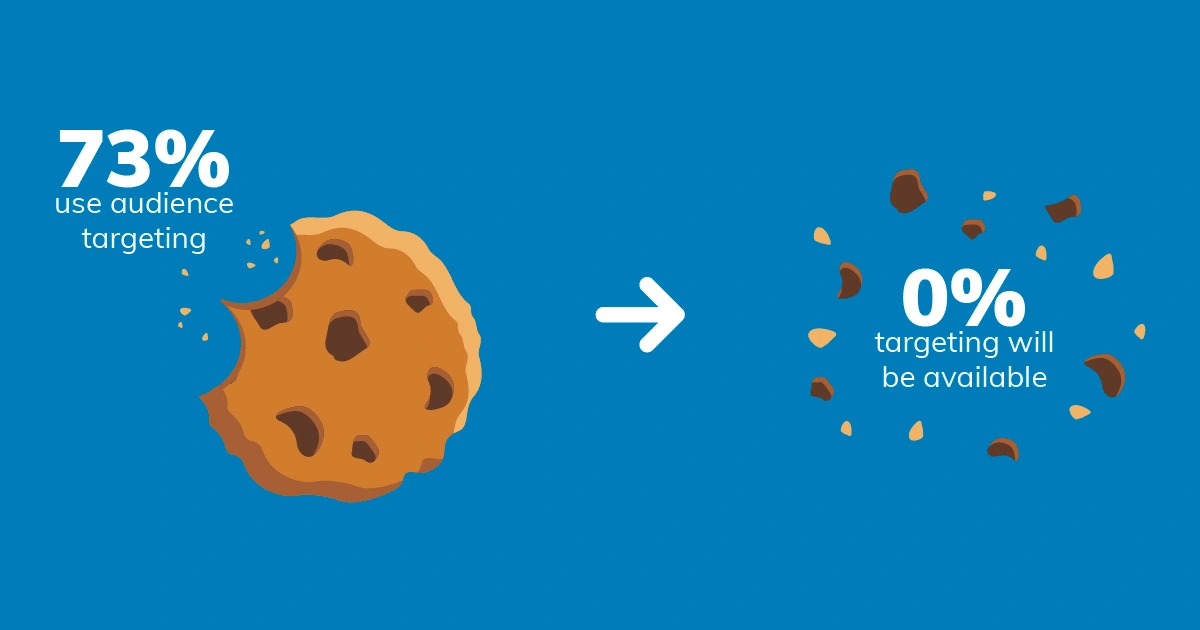
Google finally killed third-party cookies in Chrome in 2024. Safari and Firefox had already been blocking them for years. And yet, heading into 2026, a surprising number of B2B marketing teams are still running campaigns on borrowed time — patching retargeting workflows with workarounds that will not hold.
Here is the uncomfortable truth: the cookieless future is not coming. It is already here. The brands winning on customer acquisition cost right now are the ones who stopped waiting for a solution and started building one — centered on first-party data strategies that do not depend on anyone else’s infrastructure.
This guide breaks down why first-party data is your most durable asset, how to collect and activate it properly, and why the smartest path to lower CAC runs directly through owned content. Si estás leyendo esto desde el lado de paid media, presta atención.
What Killed Third-Party Cookies (And Why It Was Inevitable)
Third-party cookies tracked user behavior across websites — browsing history, product interest, intent signals — and fed that data back to advertisers for targeting. For a decade, this was the engine behind programmatic advertising. Then the walls went up.
- Regulatory pressure: GDPR in the EU and CCPA in California forced companies to obtain explicit consent for data collection. Non-compliance carries fines in the tens of millions.
- Browser restrictions: Safari and Firefox blocked third-party cookies years before Google moved. By the time Chrome followed in 2024, the ecosystem was already fractured.
- Consumer awareness: Buyers — especially B2B buyers — are more privacy-conscious than ever. Trust is a purchase driver. Surveillance-based marketing erodes it.
The result: the tracking layer that powered most paid advertising strategies no longer works reliably. CPMs went up. Attribution got murkier. And the brands that had been buying attention instead of earning it started feeling the squeeze in their CAC numbers.
First-Party Data: The Only Signal You Actually Own
First-party data is information collected directly from your audience through their voluntary interactions with your brand — form fills, demo requests, content downloads, CRM records, email engagement, on-site behavior, event registrations. You gathered it. You own it. No intermediary can take it away.
In contrast to second-party data (a partner’s first-party data shared with you) or third-party data (aggregated and sold by brokers), first-party data is inherently more accurate, more compliant, and more actionable. A prospect who downloaded your pricing guide and spent four minutes on your case studies page is telling you something real. A retargeting pixel inferred from cross-site behavior is telling you a story that may or may not be true.
For B2B brands specifically, this distinction matters at every stage of the funnel. The quality of your data determines the quality of your segmentation. The quality of your segmentation determines how efficiently you spend on acquisition.
Where First-Party Data Comes From in B2B
Most teams know they should be collecting first-party data. Fewer are systematic about it. These are the primary collection points that high-performing B2B marketing orgs are actively building in 2026:
- Gated content assets: Whitepapers, benchmark reports, and playbooks that deliver genuine value in exchange for an email and firmographic data. Not filler PDFs — content a prospect would pay for if you charged.
- Interactive tools: ROI calculators, maturity assessments, and diagnostic quizzes. These convert at higher rates than static lead magnets and capture intent signals in the process.
- Email and newsletter subscriptions: A permission-based relationship with a subscriber who chose your content is worth more than a hundred impressions to someone who never heard of you.
- Webinars and virtual events: Registration data, attendance patterns, and Q&A engagement are rich first-party signals that most brands underuse.
- CRM enrichment: Progressive profiling through sales conversations, support interactions, and customer success touchpoints. Your CRM is a first-party data asset — treat it like one.
- On-site behavior: Pages visited, scroll depth, time on page, return visits. With the right analytics stack, this tells you where prospects are in the decision process without a single cookie from a third party.
How This Connects to Reducing CAC Through Organic Content
This is where first-party data strategies stop being a compliance conversation and start being a revenue conversation. Every piece of organic content that ranks in search, earns a share, or gets bookmarked is building a pipeline of inbound interest that costs you nothing per click after the initial investment.
When a CMO at a 200-person SaaS company reads your guide on procurement software evaluation criteria and subscribes to your newsletter, you have their permission to continue the conversation. No auction. No CPM. No platform fee. That is the core logic behind reducing CAC through content rather than paid acquisition alone.
Paid media still has a role — no seré dogmático al respecto — but it works best when it amplifies content that already converts organically, and when the retargeting audiences are built from your own first-party data, not rented segments from a cookie pool that is drying up.
The brands seeing the lowest CAC right now are running a specific playbook: organic content builds topical authority and generates inbound leads, first-party data captures and qualifies those leads, and paid media is used surgically to accelerate the highest-intent segments. That sequence matters.
Five First-Party Data Strategies Worth Executing in 2026
1. Build a Content-Driven Data Collection Engine
Stop thinking about lead magnets as one-off tactics. Map your content assets to specific buying stages and use each one to capture progressively richer data. A top-of-funnel blog reader gives you an email. A mid-funnel assessment taker gives you their role, company size, and primary challenge. A bottom-funnel case study downloader tells you they are actively evaluating solutions. That progression is your segmentation engine.
2. Implement Consent-First Data Architecture
GDPR and CCPA compliance is not optional, but smart brands are treating it as a trust advantage rather than a legal checkbox. Clear, transparent consent flows — with a genuine value exchange — convert better than dark patterns and produce data that is legally defensible and behaviorally accurate. Your consent management platform should be integrated with your CRM and marketing automation from day one.
3. Activate First-Party Audiences Across Paid Channels
Your CRM list can be uploaded to LinkedIn, Meta, and Google as a custom audience. Your high-intent site visitors can be segmented by behavior and retargeted without third-party cookies, using your own data piped through server-side tagging. This is where first-party data strategies directly improve paid media efficiency — lower CPAs, higher match rates, better ROAS.
4. Use Zero-Party Data to Sharpen Personalization
Zero-party data is information a prospect volunteers explicitly — survey responses, preference settings, answers to onboarding questions. It is the highest-fidelity signal you can collect. Brands using interactive assessments and post-conversion surveys are building personalization layers that feel relevant rather than creepy, which is the line that separates effective marketing from the kind that makes buyers opt out.
5. Treat Your Email List as a Strategic Asset, Not a Broadcast Channel
An engaged email subscriber is a first-party data relationship. Behavioral signals from your email program — what they click, what they ignore, what they forward — are telling you about purchase intent in real time. Segment aggressively. Suppress contacts who have gone cold. Use email engagement data to trigger sales outreach at the right moment. Most B2B brands are leaving significant pipeline on the table by treating email as a newsletter rather than a conversion channel.
What Good Looks Like in 2026
The B2B marketing teams outperforming on CAC right now share a few traits. They have a documented first-party data strategy tied to business outcomes, not just a GDPR policy. They are producing content that ranks, converts, and builds a subscriber base they own. They are using that owned audience to make paid media smarter and more efficient. And they are measuring data quality alongside data volume — because a list of 500 highly qualified, engaged prospects beats a list of 5,000 cold contacts every time.
The cookieless future did not destroy digital marketing. It rewarded the brands that were already building direct relationships with their audiences and punished the ones that were renting access to someone else’s.
Claro, that is a harder model to build. But it compounds. And it does not disappear when a browser updates its privacy settings.
Ready to Build a First-Party Data Strategy That Reduces CAC?
At Social Peak Media, we help B2B CMOs and founders build content programs that generate owned audience data, reduce dependence on paid acquisition, and drive measurable pipeline. If your current strategy relies on rented audiences and third-party signals, it is time to talk.
Book a strategy session with our team — and let’s build something you actually own.
By Jose Villalobos
“`