Understanding Google’s Latest Algorithm Updates: What You Need to Know
“`html
Google Algorithm Updates SEO Strategy: What CMOs and Founders Must Know in 2026
Here’s the uncomfortable truth: most SEO strategies are built to survive last year’s Google. The March 2024 Core Update, the August 2024 Core Update, the September 2023 Helpful Content System overhaul — each one sent ranking signals that the majority of site owners still haven’t fully processed. And with Google’s AI-driven search experience accelerating into 2025 and beyond, the gap between reactive teams and proactive ones is only widening.
This isn’t a panic piece. It’s a practical breakdown of how Google algorithm updates should be shaping your SEO strategy right now — especially if you’re a CMO or founder trying to build durable organic visibility, not just chase rankings that evaporate after the next rollout.
Let’s get into it.
What Google’s Recent Core Updates Actually Targeted
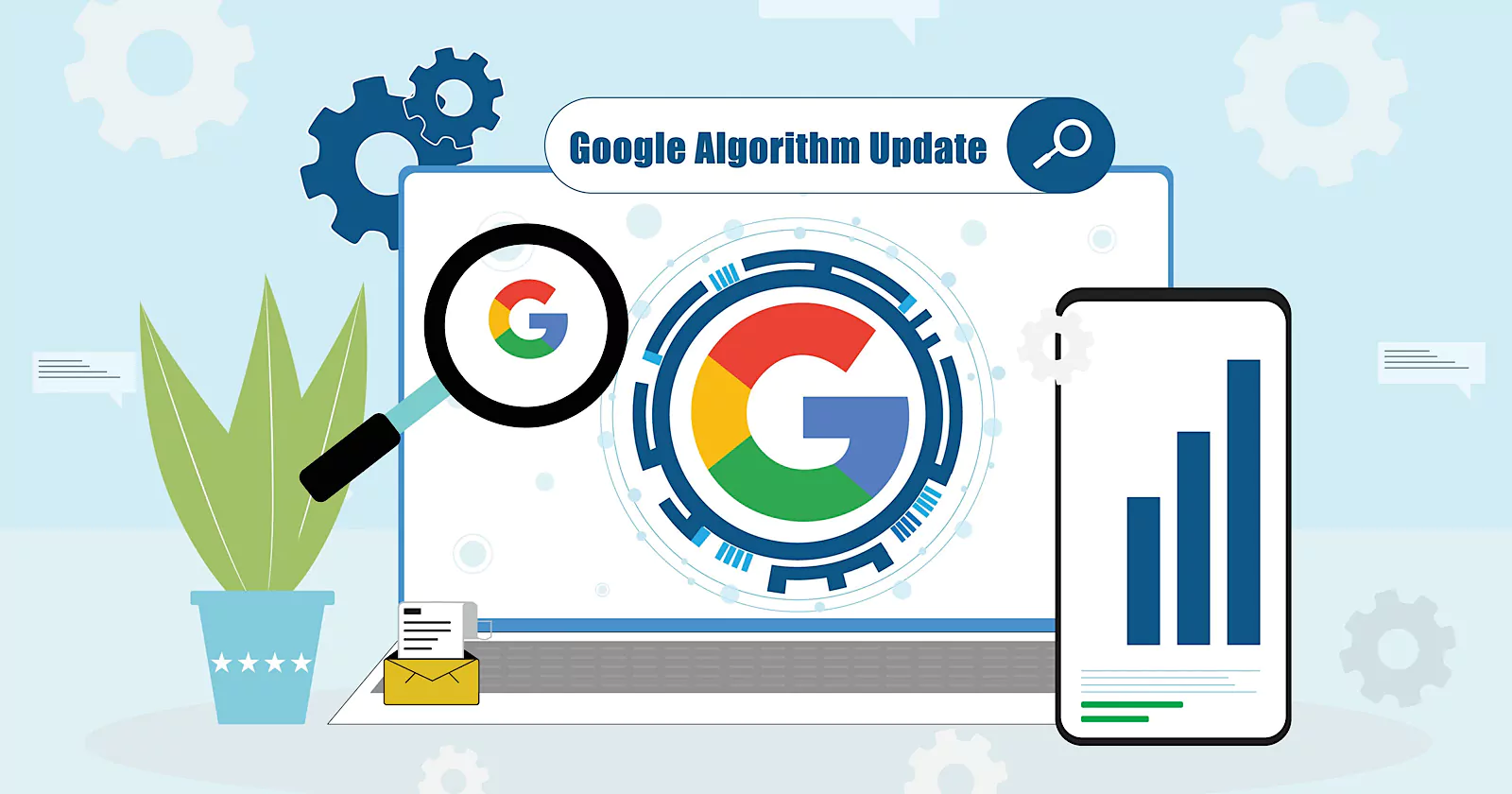
Google doesn’t send memos. It sends tremors. The 2023–2024 update cycle was notable not just for frequency but for the clarity of intent behind each rollout. Understanding that intent is the foundation of any intelligent Google algorithm updates SEO strategy.
The September 2023 Helpful Content System Update was a direct signal: content written for search engines rather than humans would be penalized at the site level — not just the page level. That distinction matters. A handful of low-quality, AI-stuffed pages can drag an entire domain’s visibility down. Google’s classifier doesn’t grade on a curve.
The October 2023 Core Update followed with a focus on stabilizing rankings for sites that had already demonstrated consistent trustworthiness. Sites bouncing between tactics saw volatility. Sites with coherent topical authority held ground.
Then came the March 2024 Core Update — arguably the most consequential in years. Google paired it with new spam policies targeting three specific abuses: expired domain manipulation, scaled content abuse (including AI-generated content deployed at volume without editorial oversight), and site reputation abuse, where high-authority domains were hosting third-party content purely to pass PageRank.
The August 2024 Core Update refined this further, rewarding sites with strong EEAT signals — Experience, Expertise, Authoritativeness, and Trustworthiness — and continuing to suppress domains that hadn’t cleaned up from March.
The pattern is clear. Google is systematically closing the shortcuts that allowed thin content and domain manipulation to outrank legitimate expertise. Tu estrategia de SEO tiene que reflejar eso, sin rodeos.
How These Updates Rewired Search Rankings
What’s different about the 2023–2024 update cycle is that Google moved away from page-level signals as the primary ranking determinant and shifted toward domain-level and entity-level trust. A single well-optimized page no longer compensates for a weak overall content profile.
This has direct implications for how you approach your SEO strategy:
- Topical coverage matters more than keyword targeting. Google is evaluating whether your site comprehensively covers a subject area, not just whether individual pages match a query. Thin coverage of broad topics is a liability.
- Author and entity signals are being weighted. Bylines, author bios, linked credentials, and consistent brand mentions across authoritative third-party sources all feed EEAT. Anonymous content is increasingly disadvantaged.
- Link quality has been re-evaluated — again. The March 2024 spam policies specifically targeted link schemes built around expired domains. If your backlink profile relies on these, expect continued erosion.
- Helpful content classification is site-wide. One bad content decision can affect your entire domain’s ability to rank. Editorial governance is now an SEO function, not just a content team concern.
For CMOs, this means your content strategy and your SEO strategy are no longer separate conversations. They never really were, pero ahora Google lo está haciendo oficial.
What a Google Algorithm-Proof SEO Strategy Looks Like in 2026
Let’s be direct: no strategy is fully algorithm-proof. But the sites that consistently recover fastest — or never drop to begin with — share identifiable characteristics. Here’s what the evidence from the 2023–2024 update cycle points to.
Build Topical Authority, Not Just Keyword Coverage
Google’s systems are increasingly capable of identifying whether a site is a genuine authority on a subject or simply a content farm optimized for search terms. The difference shows up in how deeply and coherently a site covers related concepts, questions, and subtopics within a given domain.
This is the core premise of a Semantic SEO and Topical Authority Framework — and it’s what separates sites that weather algorithm updates from those that scramble after each one. If your content strategy isn’t organized around topic clusters with clear pillar and supporting content architecture, you’re leaving both rankings and reader trust on the table.
Prioritize EEAT at Every Level
Experience, Expertise, Authoritativeness, Trustworthiness — these aren’t abstract ideals. They’re measurable through specific on-page and off-page signals. In 2026, that means:
- Named authors with verifiable credentials and consistent publishing histories
- Primary research, original data, or documented first-hand experience where possible
- Editorial standards that are visible — citing sources, updating outdated content, correcting errors transparently
- Third-party validation through press coverage, industry citations, and earned backlinks — not manufactured ones
Audit for Helpful Content Classification Risk
If you haven’t done a content audit since the September 2023 Helpful Content Update, you’re overdue. Look for pages that exist primarily to capture keyword traffic rather than answer a genuine user need. Consolidate, improve, or remove them. The goal isn’t a bigger site — it’s a more trustworthy one.
Monitor Update Cycles Proactively
Google’s confirmed update schedule has become more predictable, but the effects are not. Set up rank tracking that captures pre- and post-update baselines. When a core update rolls out, you need comparative data — not guesswork — to determine whether volatility is algorithm-related or caused by something on your end.
In 2026, Google Search Console’s Performance reports and third-party volatility trackers like Semrush Sensor or Mozcast remain essential for this. Cross-reference traffic drops against Google’s confirmed update dates before making any reactive changes.
The 2026 Context: AI Overviews and What They Change
Google’s rollout of AI Overviews in Search has added a new dimension to any Google algorithm updates SEO strategy. For informational queries especially, the featured position now often goes not to the top-ranked blue link but to a synthesized AI response that cites multiple sources.
What this means practically: visibility is no longer synonymous with ranking. Sites that are cited in AI Overviews tend to share the same characteristics that core updates have been rewarding — deep topical coverage, strong EEAT, original insights, and clear entity signals. The strategic response is the same. Build the kind of site Google trusts enough to quote.
For B2B content specifically, AI Overviews are more prevalent in awareness-stage queries. Middle- and bottom-funnel content — comparisons, use cases, implementation guides — still drives significant click-through to specific pages. Don’t abandon traditional SEO fundamentals. Double down on them where they still move the needle.
Three Things to Stop Doing After These Updates
Claro, strategy is about addition. But sometimes it’s about subtraction first.
- Stop publishing content at volume without editorial oversight. Scaled content abuse is explicitly on Google’s radar. Volume without quality is now a liability, not an asset.
- Stop relying on expired domain backlink schemes. The March 2024 spam policies targeted this directly. If your agency is still offering this as a tactic, that’s a red flag worth addressing.
- Stop treating SEO and content strategy as separate functions. Post-2024, your content decisions have direct SEO consequences at the domain level. Alignment between these teams isn’t a nice-to-have — it’s structural.
Start Here: Your Next Move
If you’re a CMO or founder trying to build an SEO strategy that doesn’t need to be rebuilt every six months, the foundation is the same regardless of which specific update Google rolls out next: genuine topical authority, demonstrated expertise, and content that earns trust rather than manufacturing the appearance of it.
Start with a solid understanding of SEO fundamentals — then build your topical authority architecture around it. That’s the compounding asset. Everything else is tactics.
Want a content audit that identifies where your site stands on Google’s EEAT criteria — and what to do about it? Talk to the Social Peak Media team. We work with B2B CMOs and founders to build content strategies built for algorithm durability, not algorithm dependency.
— Jose Villalobos
“`