How to Start Email Marketing: 10 Things to Consider
“`html
Email Marketing Best Practices That Actually Build Pipeline (Not Just Open Rates)
Most B2B teams treat email like a broadcast tower. They build a list, fire off a newsletter, check open rates, and wonder why no one’s booking calls. Here’s the uncomfortable truth: the channel isn’t broken. The approach is.
Email still delivers the highest ROI of any digital marketing channel—around $42 back for every dollar spent, according to data that has held remarkably consistent for years. But that number assumes you’re following email marketing best practices, not just sending emails and hoping. In 2026, with AI-generated noise flooding every inbox, the gap between teams who do this right and teams who don’t is wider than ever.
This guide is for CMOs and founders who want email to function as a real revenue system—one that compounds over time, the same way organic content does. And yes, the two are connected. We’ll get to that.
Why Email Marketing Still Wins in 2026
Social algorithms change. Ad costs keep climbing. But your subscriber list? You own it. That’s the foundational argument for email, and it hasn’t aged a day.
Unlike LinkedIn posts or Google ads, an email lands directly in the inbox of someone who explicitly said they want to hear from you. No algorithm decides whether 8% or 80% of your audience sees the message. No platform can take that reach away overnight.
There’s also the personalization angle. Modern email platforms let you segment by industry, job title, behavior, purchase history, funnel stage—the list goes on. A CMO at a 200-person SaaS company should not be getting the same email as a solo founder just figuring out content strategy. When you match message to audience this precisely, engagement follows.
The 10 Email Marketing Best Practices Worth Following
1. Build Your List With Intent, Not Volume
A list of 500 highly qualified subscribers will outperform a list of 5,000 lukewarm contacts every single time. Before you chase growth, get clear on who you’re building the list for. What role do they have? What problem keeps them up at night? What would make them excited to see your name in their inbox?
Your opt-in offer should answer a specific, real problem. Generic lead magnets (“Download Our Free eBook!”) are noise. A practical checklist, a benchmark report, a short diagnostic tool—those earn real subscribers.
2. Segment From Day One
Most teams wait until their list gets “big enough” to segment. That’s backwards. Segment early, even if you only have two groups. At minimum, separate cold subscribers from engaged ones, and new subscribers from long-term contacts.
As you grow, layer in behavioral segmentation: who clicked a specific link, who visited your pricing page, who downloaded a particular resource. This is where email stops feeling like email and starts feeling like a conversation.
3. Write Subject Lines for Humans, Not Algorithms
There’s no inbox algorithm to game here—just a person deciding in under two seconds whether to open or archive. Curiosity, specificity, and relevance are your only tools. “5 things you should know” is forgettable. “Why your last email campaign tanked (and what to do about it)” is not.
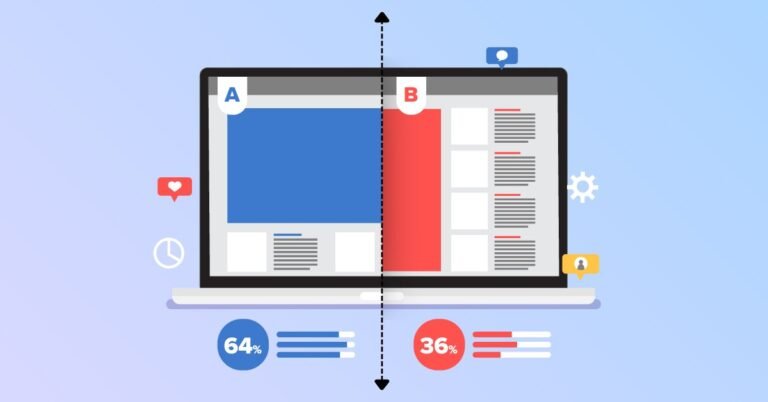
Test two subject lines regularly. Not obsessively, but consistently. Over time, you’ll develop a clear sense of what resonates with your specific audience.
4. Send With a Purpose, Not a Schedule
Sending every Tuesday at 9am because someone told you that’s when open rates are highest is not a strategy. Send when you have something worth saying. That might be weekly. It might be twice a month. The worst emails are the ones sent because “we haven’t sent anything in a while.”
Your subscribers will tolerate less-frequent emails. They won’t tolerate filler.
5. Make Every Email Earn Its Place in the Inbox
Each email should do one of three things: educate, challenge a belief, or move the reader toward a decision. Ideally, it does two of those at once. If you can’t articulate why a subscriber should care about a particular email before you send it, don’t send it.
This is also where your organic content strategy pays dividends. If you’re publishing strong blog content—the kind that answers real questions from real buyers—your emails have an endless supply of genuinely useful material to share, summarize, or extend. That’s not a coincidence. It’s a system. See how the Content Marketing System works as a foundation for this.
6. Nail the Preview Text (It’s the Second Subject Line)
Most email clients show 40–90 characters of preview text alongside the subject line. Most senders ignore this entirely and let the platform pull in random copy from the email body. Eso es dejar dinero sobre la mesa, claro.
Write preview text deliberately. It should complement the subject line, not repeat it. Think of it as a one-two punch: subject line creates curiosity, preview text adds context or sharpens the hook.
7. Design for Scanning, Write for Reading
B2B buyers are busy. They scan first to decide if the email is worth reading, then they read. Your formatting should support both behaviors. Short paragraphs. Clear headers when appropriate. One primary CTA that’s impossible to miss.
Plain-text emails often outperform heavily designed templates in B2B contexts—they feel more like a message from a colleague and less like a campaign. Test both with your audience, but don’t assume design adds value automatically.
8. Track Metrics That Connect to Revenue
Open rate is a vanity metric. It’s been compromised further since Apple Mail’s privacy protections inflated open rates across the board. Focus instead on click-through rate, replies, conversions, and revenue attributed to email sequences.
If you’re running a nurture sequence, track how many subscribers who entered it eventually became leads or customers. That’s the number your CFO cares about. That’s the number you should care about too.
9. Clean Your List Regularly
An engaged list of 1,000 people is more valuable than a stale list of 10,000. Unengaged subscribers hurt your deliverability, inflate your costs, and distort your metrics. Run a re-engagement campaign for subscribers who haven’t opened or clicked in 90 days. If they don’t respond, remove them without guilt.
This is not a sign of failure. It’s the discipline that keeps email performing at the level it should.
10. Connect Email to Your Organic Content Ecosystem
This is the practice most B2B teams overlook completely, and it’s arguably the highest-leverage one. Email and organic content are not separate channels—they’re two parts of the same system. Your blog builds authority and attracts inbound traffic. Email nurtures that audience and converts it over time.
When a potential buyer reads three of your blog posts and then subscribes to your list, they’re already pre-sold on your perspective. The emails they receive should deepen that relationship, not reset it. That means your email content should feel like a natural continuation of your blog content—same voice, same point of view, same depth.
If you’re still relying on paid ads to fill the top of your funnel, you’re renting attention instead of owning it. The Content Marketing System is built around replacing that rental with organic infrastructure—and email is the engine that converts that infrastructure into pipeline.
What “Best Practices” Actually Means in 2026
The phrase “best practices” gets thrown around so much it’s nearly meaningless. In the context of email marketing, it doesn’t mean following a universal checklist. It means building habits that align your email program with how real buyers actually make decisions.
Real buyers don’t respond to pressure. They respond to relevance. They don’t trust brands that show up only when they have something to sell. They trust brands that consistently share useful thinking, take clear positions, and treat their inbox like a relationship rather than a transaction.
Sin chamullo: the teams winning at email right now aren’t the ones with the most sophisticated automation. They’re the ones with the clearest point of view and the discipline to communicate it consistently.
A Few Signals Your Email Program Needs Work
- Open rates are declining quarter over quarter and you’re blaming the algorithm instead of the content
- Your list grows but your reply rate is near zero—subscribers aren’t engaged, they’re dormant
- Every email ends with “Book a call” before you’ve given the reader a reason to trust you
- Email and content are managed by different people with no coordination between them
- You can’t name a single email that generated a conversation or a lead in the last 90 days
If two or more of those are true, the issue isn’t tactics. It’s strategy. The good news is that fixing it doesn’t require a bigger tech stack or a larger team—it requires a clearer system.
Start Here
Pick one of the ten practices above that your team isn’t doing well right now. Just one. Work on it for 30 days before adding another variable. Email marketing rewards consistency and iteration far more than it rewards complexity.
And if you want to understand how email fits into a broader organic growth system—one that reduces your dependence on paid ads and builds compounding authority over time—read the Content Marketing System guide. Email is the conversion layer. Organic content is the foundation. Together, they’re what sustainable pipeline looks like.
Written by Jose Villalobos, Social Peak Media
“`