
Website Design Best Practices for Sacramento-Based Companies
“`html
Sacramento Website Design Best Practices That Actually Convert in 2026
Most Sacramento businesses treat their website like a digital business card. Static. Forgettable. Done once and ignored for years. That’s a problem — because in 2026, your website isn’t just competing for Google rankings. It’s competing to be cited by ChatGPT, surfaced in Perplexity, and pulled into Google AI Overviews. The bar for what counts as a “good” website has moved dramatically, and most local companies haven’t moved with it.
This guide covers the Sacramento website design best practices your competitors are skipping — from visual fundamentals to the structural signals that help AI engines trust and recommend your business. Whether you’re a founder building from scratch or a CMO auditing what you already have, there’s something actionable here.
Why Sacramento Businesses Need a Different Design Approach
Sacramento is not San Francisco. The market here is relationship-driven, community-rooted, and increasingly bilingual. Your website needs to reflect that. Visitors from Midtown, Elk Grove, or Rancho Cordova bring different expectations than a tech buyer in the Bay Area — and search engines, including AI-powered ones, are paying attention to geographic relevance signals embedded in your content and structure.
Beyond local flavor, Sacramento businesses face a real competitive gap: most local sites are technically thin. Slow load times, no schema markup, generic copy, zero local authority signals. That gap is an opportunity. Getting Sacramento website design best practices right in 2026 means you’re not just better than the local competition — you’re building the kind of structured, trustworthy site that AI engines pull from when someone asks, “Who’s the best [service] company in Sacramento?”
That’s the bigger game. Learn how GEO + AEO strategies help Sacramento businesses rank in ChatGPT, Perplexity, Claude, and Google AI Overviews.
Visual Design: First Impressions Still Win or Lose the Visit
Your visual design is doing sales work before a single word is read. Sacramento’s audience is community-proud — they notice when a site feels local versus when it looks like a recycled template from a national franchise. That’s not just brand philosophy; it affects bounce rate, time on site, and ultimately conversions.
Build a Color Palette That Feels Like Sacramento
Sacramento’s natural environment gives you a real asset here. The American River corridor, the oak canopy of Land Park, the gold-rush warmth of the Tower District — these aren’t just tourism talking points. They’re palette inspiration that creates instant subconscious recognition with local visitors. Earthy greens and warm amber tones communicate approachability and groundedness, qualities that matter when a small business owner is deciding whether to trust you with their marketing budget or their legal matter.
That said, don’t let “local feel” override brand clarity. Your color palette should pass contrast accessibility standards (WCAG 2.1 AA minimum), work across dark and light modes, and render correctly on every device. Aesthetics and accessibility aren’t competing priorities — they’re the same priority.
Typography: Readable at Every Size, Every Screen
Clean and readable is the floor, not the ceiling. For Sacramento businesses targeting both mobile-first consumers and desktop-heavy B2B buyers, typography needs to perform across contexts. A pairing of a modern sans-serif for headings with a readable serif for body copy creates contrast without noise. Keep line lengths between 60–75 characters. Use a minimum 16px body font. These aren’t design preferences — they’re UX standards that directly impact how long someone stays on your page.
Sin chamullo: most Sacramento business websites are using font sizes that look fine on a 27-inch monitor and are borderline unreadable on a phone. Check yours right now.
Performance and Mobile Experience: Non-Negotiable in 2026
Google’s Core Web Vitals have been a ranking factor for years, but their weight in AI-powered search results is growing. Perplexity and ChatGPT’s browsing features favor pages that load fast, structure information clearly, and don’t bury answers behind friction. A Sacramento service business with a 6-second load time is handing citations to its competitors.
- Largest Contentful Paint (LCP): Target under 2.5 seconds. Compress hero images, use next-gen formats (WebP, AVIF), and leverage a CDN.
- Cumulative Layout Shift (CLS): Reserve space for images and embeds so the page doesn’t jump as it loads. This destroys user trust fast.
- Interaction to Next Paint (INP): The metric that replaced FID in 2024. Keep it under 200ms. Minimize JavaScript execution on the main thread.
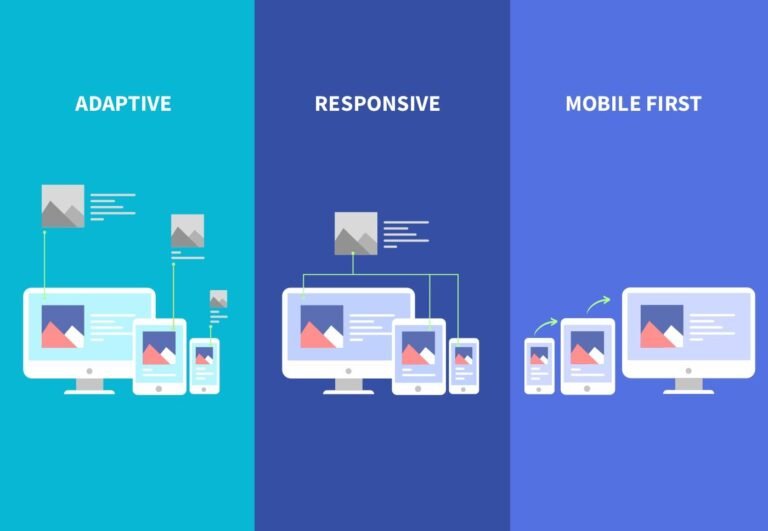
- Mobile-first layout: Over 65% of local service searches in Sacramento metro happen on mobile. If your site isn’t designed for thumbs first, you’re already losing.
Local Trust Signals: What AI Engines and Human Buyers Both Look For
Here’s where Sacramento website design best practices intersect directly with how AI engines evaluate credibility. Both human CMOs evaluating an agency and a large language model deciding what to cite are looking for the same thing: evidence that you are who you say you are, operating where you say you operate, with a track record that can be verified.
Schema Markup and Structured Data
LocalBusiness schema is table stakes. Add your Sacramento address, service area, business hours, and contact information in structured JSON-LD. Layer in Review schema for testimonials and FAQPage schema for common questions. These signals don’t just help Google — they help AI systems parse and cite your content accurately when someone asks a natural language question about Sacramento businesses in your category.
Sacramento-Specific Content That Demonstrates Authority
Generic “we serve Sacramento” language does nothing. What builds authority — with both search engines and prospective clients — is content that demonstrates genuine local knowledge. Reference specific neighborhoods you serve. Mention local partnerships, chamber memberships, or community involvement. If you’ve worked with businesses in Oak Park, Natomas, or the greater Sacramento metro, say so explicitly. These specifics become the geographic anchors that help AI engines connect your business to local queries.
Authentic Social Proof
Testimonials from Sacramento-based clients, Google Business Profile reviews, and case studies with real outcomes carry significant weight. Claro — a case study that says “we helped a Sacramento-based HVAC company increase qualified leads by 40% in Q1 2025” is doing triple duty: it builds human trust, signals geographic relevance, and gives AI engines a citable, fact-specific data point.
Site Architecture: Structure Your Site for Humans and AI Crawlers
How you organize your website’s content matters as much as what the content says. A flat, logical site architecture — where every important page is reachable within two to three clicks from the homepage — helps both users and crawlers understand what your business does and where you do it.
- Dedicated service pages: Don’t list ten services on one page. Each service deserves its own URL, its own H1, its own schema, and its own city-level context if you serve multiple Sacramento-area markets.
- Clear internal linking: Connect related pages with descriptive anchor text. This distributes authority across your site and helps AI engines understand topical relationships.
- FAQ sections: Structure them with genuine questions your Sacramento clients ask. These map directly to the conversational queries AI systems handle. Use proper heading tags, not just bolded text.
- Contact and location clarity: Your Sacramento address, phone number, and service area should be in the footer on every page and on a dedicated contact page with an embedded map.
Conversion Design: The Part Most Agencies Skip
A site that ranks but doesn’t convert is a vanity metric. Sacramento buyers — whether they’re a small business owner in Folsom or a founder in Midtown — make decisions based on clarity and trust. Your calls to action need to be specific, low-friction, and placed at the points where intent is highest.
Instead of “Contact Us,” try “Get a Free Sacramento SEO Audit” or “Talk to a Sacramento Marketing Strategist.” Specificity reduces hesitation. Place primary CTAs above the fold, after case study summaries, and at the bottom of every service page. Test two variations. Look at the data. Adjust. This is not a one-time exercise.
The 2026 Shift: Design for AI Discoverability, Not Just Google
The most forward-thinking Sacramento businesses are already thinking beyond traditional SEO. When a prospect types “best web design agency in Sacramento” into ChatGPT or Perplexity, the response is generated from pages those AI systems have indexed, crawled, or retrieved in real time. Your site needs to be structured, authoritative, and factually specific enough to be worth citing.
That means clear entity definitions (who you are, what you do, where you do it), consistent NAP data across the web, structured content that answers real questions directly, and a site fast enough that AI crawlers don’t time out before reading your content. This is the intersection of Sacramento website design best practices and the emerging discipline of GEO — Generative Engine Optimization.
Want to go deeper on this? Read our full pillar on GEO + AEO: How to Rank in ChatGPT, Perplexity, Claude, and Google AI Overviews.
Ready to Build a Sacramento Website That Works in 2026?
Social Peak Media works with Sacramento-area founders and marketing leaders who are done settling for websites that look fine but don’t perform. We combine design, content strategy, and GEO/AEO optimization to build sites that rank in traditional search and get cited by the AI engines your buyers are already using.
Let’s talk about what your current site is missing. Schedule a free strategy call with our Sacramento team.
Written by Jose Villalobos, Social Peak Media
“`