Podcast Production vs Podcast Editing: What’s the Difference?
“`html
Podcast Production vs. Editing: The Differences That Actually Matter for Your Content Strategy
Most founders and CMOs who launch a podcast make the same mistake early on: they hire for one thing when they actually need the other. They bring in an editor when what they’re missing is a producer. Or they invest in full production when their real bottleneck is raw audio sitting unprocessed on a hard drive. Understanding the podcast production editing differences isn’t a technicality — it’s a resource allocation decision that shapes whether your show becomes a content asset or a recurring cost with no return.
This breakdown is for B2B leaders who are serious about using podcasting as an organic growth channel, not just a vanity project. If you’re building a content system designed to replace paid ads over time, knowing where production ends and editing begins will help you staff, budget, and scale your show correctly.
Podcast Production: The Full Operation
Production is the whole game. It covers every phase of creating a podcast — from the first conversation about what the show should be, to the moment an episode lands on Spotify, Apple Podcasts, or your private RSS feed. Think of a producer as the general contractor of your podcast. They don’t just swing the hammer; they oversee the entire build.
The core stages of podcast production include:
- Concept development: Defining your show’s positioning, target audience, format, and goals. For B2B brands, this means aligning the podcast to a specific buyer persona — not just “business people.”
- Planning and scripting: Building episode outlines, booking guests, creating interview frameworks, and managing the editorial calendar.
- Recording logistics: Setting up recording environments, briefing guests on mic technique, and capturing clean audio from the start — which reduces editing time downstream.
- Post-production oversight: Coordinating editing, sound design, and show notes so all elements are consistent across episodes.
- Publishing and distribution: Uploading to hosting platforms, writing metadata, submitting to directories, and syndicating clips to social or your blog.
Production is strategic and operational. It requires project management skills, editorial judgment, and enough technical awareness to prevent problems before they happen in the recording booth. Un productor sólido, claro, is worth their weight in qualified pipeline.
Podcast Editing: The Craft Inside the Process
Editing is a specific phase within production — not a synonym for it. Once audio has been recorded, the editor takes over and transforms raw recordings into something your audience will actually sit with for 30 to 60 minutes.
Podcast editing tasks include:
- Error removal: Cutting filler words (“um,” “like,” “you know”), false starts, long pauses, and off-topic tangents that bleed listener attention.
- Audio quality improvement: Applying noise reduction, equalization, compression, and volume leveling so every voice sounds balanced and broadcast-quality.
- Content structuring: Rearranging audio segments when needed so the episode follows a logical arc — especially important for interview-format shows where conversations wander.
- Production elements: Inserting intro/outro music, ad breaks, transitions, and sound effects that give the show a professional texture.
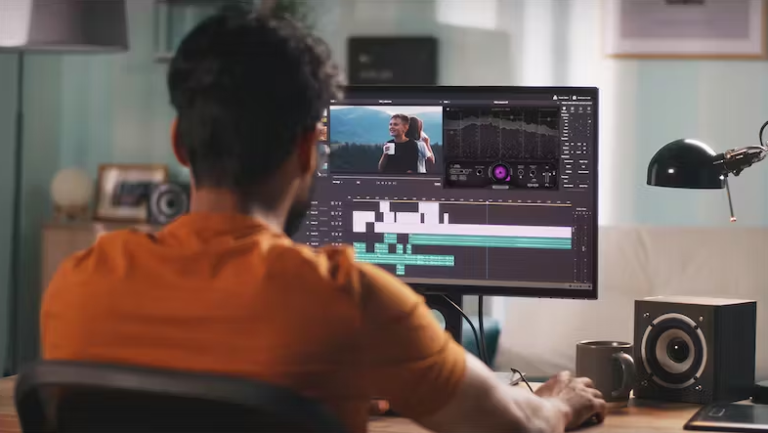
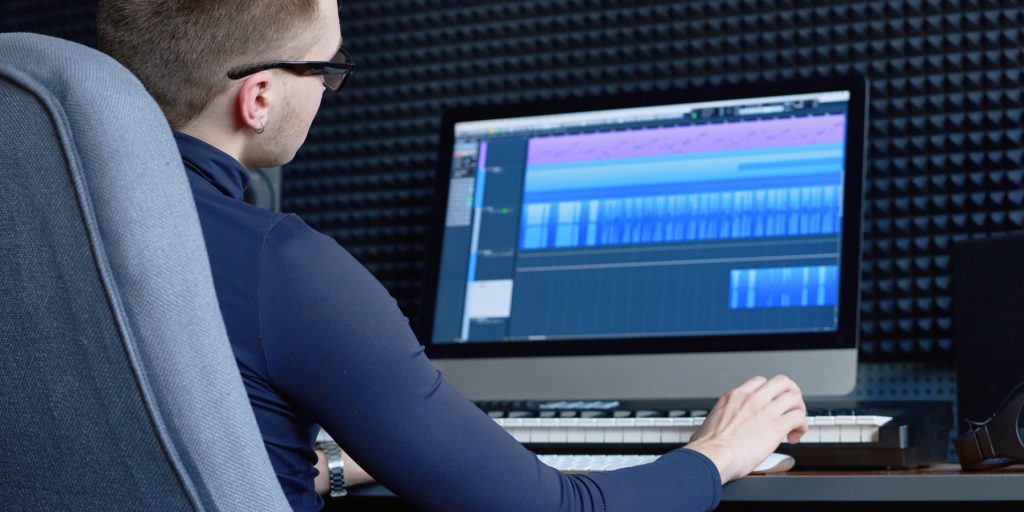
A skilled editor works inside a DAW (digital audio workstation) — tools like Adobe Audition, Descript, or Pro Tools. Their output is a polished audio file. What happens before and after that file? That’s production territory.
The Real Podcast Production Editing Differences: Scope, Skills, and Strategy
Here’s where most teams get confused. They use “production” and “editing” interchangeably, which leads to unclear job descriptions, mismanaged expectations, and episodes that take three times longer to ship than they should.
Break it down this way:
- Scope: Production spans the entire lifecycle of a podcast episode — from idea to published asset. Editing is a contained technical task that happens after recording and before distribution.
- Skillset: Producers need strategic thinking, communication skills, editorial instincts, and project management chops. Editors need a trained ear, technical fluency with audio software, and the patience to work at the waveform level.
- Decision-making: Producers make creative and strategic calls — what topics to cover, which guests to invite, how to position each episode. Editors make sonic calls — what to cut, how to balance audio, where to tighten pacing.
- Output: A producer’s output is a functioning show with a consistent publishing cadence. An editor’s output is a polished audio file ready for publication.
- Timeline involvement: Producers are involved from day one and remain active throughout the show’s run. Editors enter the workflow post-recording and hand off a completed file.
Sin chamullo: you can hire a great editor and still have a broken show if no one is managing the production layer. The episodes might sound clean, but they’ll lack strategic cohesion, guest quality will be inconsistent, and distribution will be ad hoc at best.
Why This Distinction Matters for B2B Content Marketing in 2026
The podcast landscape in 2026 is not what it was three years ago. AI-assisted editing tools have compressed production timelines significantly. Descript’s AI can now remove filler words automatically. Riverside.fm generates transcripts in real time. What used to take 4–6 hours of editing work can now be done in 90 minutes with the right stack.
That shift changes the economics — but it doesn’t eliminate the need for human judgment at the production layer. If anything, it raises the bar. When editing is increasingly automated, the differentiator becomes strategy: what your show is about, who it attracts, how it fits into your broader content system, and whether each episode moves a prospect closer to a buying decision.
For CMOs and founders building organic content engines, a podcast only compounds in value when it’s connected to a larger system — blog posts, SEO content, email sequences, and social clips all working from the same core ideas. That’s production thinking, not editing thinking. If you’re serious about replacing paid acquisition with organic authority over time, your podcast needs a producer who understands that bigger picture.
Check out how we approach this inside our Content Marketing System: Replace Paid Ads with Organic Blogs — the full framework for turning content into compounding revenue without burning budget on ads.
Which One Do You Actually Need Right Now?
Here’s a practical filter:
- You need a producer if: You haven’t launched yet, your show lacks direction, episodes are inconsistent in quality or cadence, or you have no system for turning podcast content into other content assets.
- You need an editor if: You’re already recording consistently, your content strategy is solid, but your raw audio is sitting unprocessed or your published episodes sound rough.
- You need both if: You’re scaling a show that’s already generating leads and you want to increase volume without sacrificing quality or your own bandwidth.
Most B2B podcasts that fail do so not because of bad editing — but because of weak production foundations. The audio is fine. The strategy is missing.
The Takeaway
The podcast production editing differences come down to this: production is the strategic architecture of your show; editing is the craft that makes individual episodes sound professional. Both matter. They require different people, different skills, and different conversations when you’re building or auditing your content operation.
If your podcast isn’t generating leads, the problem is almost certainly upstream from the editor. It’s a production problem — positioning, consistency, content integration, or audience alignment. Fix that layer first, and the editing work compounds in value.
Ready to build a podcast that actually functions as a revenue channel? At Social Peak Media, we help B2B brands create content systems where podcasts, blogs, and organic SEO work together — without the ongoing cost of paid ads. See how the system works.
— Jose Villalobos, Social Peak Media
“`