Brand Strategy Development: A Complete Guide to Building Your Brand with Purpose
“`html
Brand Strategy Development Guide: How CMOs and Founders Build Brands That Actually Stick
By Jose Villalobos, Founder of Social Peak Media
Most brands don’t fail because of bad products. They fail because nobody inside the company can answer three questions without contradicting each other: Who are we for? What do we stand for? Why should anyone care? That’s a brand strategy problem — and it’s more common than most CMOs want to admit.
This brand strategy development guide is built for the founders and marketing leaders who are done winging it. Whether you’re rebuilding from the ground up or stress-testing what already exists, what follows is a practical framework grounded in how brands actually grow — not how they look in a pitch deck.
What Brand Strategy Actually Is (and What It Isn’t)
Let’s be direct: brand strategy is not your logo. It’s not your color palette, your tagline, or your Instagram aesthetic. Those are outputs. Brand strategy is the upstream decision-making framework that determines what your brand stands for, how it’s positioned in the market, and what emotional relationship it builds with the right audience over time.
At Social Peak Media, we define it this way: a brand strategy is a holistic roadmap that aligns your business objectives with your brand’s emotional impact, voice, values, and audience perception. Every visual, every message, every campaign should be traceable back to it.
If branding is the house, strategy is the blueprint. And you wouldn’t pour a foundation without one.
Why Most Brands Get This Wrong
Here’s the pattern we see constantly. A business launches. Someone designs a logo on Canva. A tagline gets written that sounds clever but communicates nothing. Content goes out on social media with no through-line. Six months later, leadership is asking why the brand isn’t resonating — and the honest answer is that it was never clearly defined in the first place.
Brand strategy forces you to slow down and answer hard questions before you spend a dollar on execution:
- Who are we actually built for?
- What problem do we solve better than anyone else in the market?
- What’s the emotional reaction people have when they interact with us?
- What do we stand for when it’s inconvenient?
If you can’t answer those internally, your audience definitely can’t answer them externally. Y eso, claro, es el problema.
The 7 Pillars of a Solid Brand Strategy
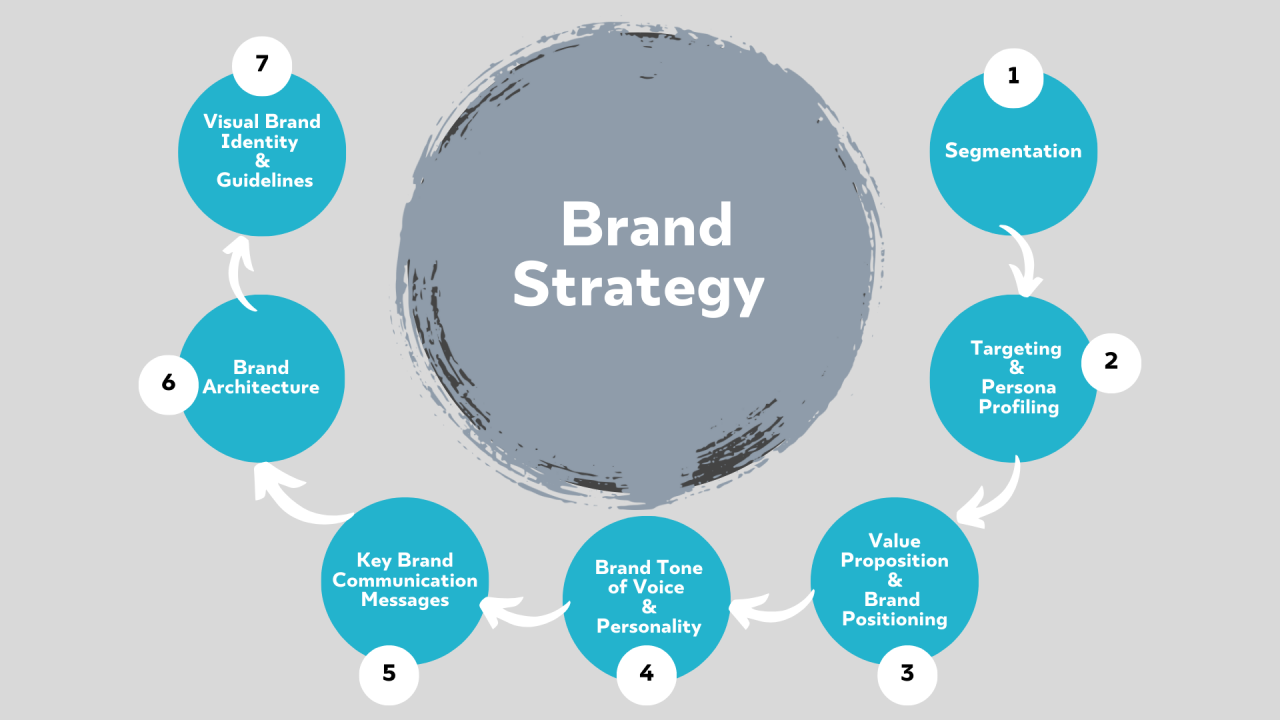
A brand strategy that actually holds up under growth pressure touches every layer of your business. These aren’t just philosophical exercises — each pillar has operational consequences.
1. Brand Purpose and Mission
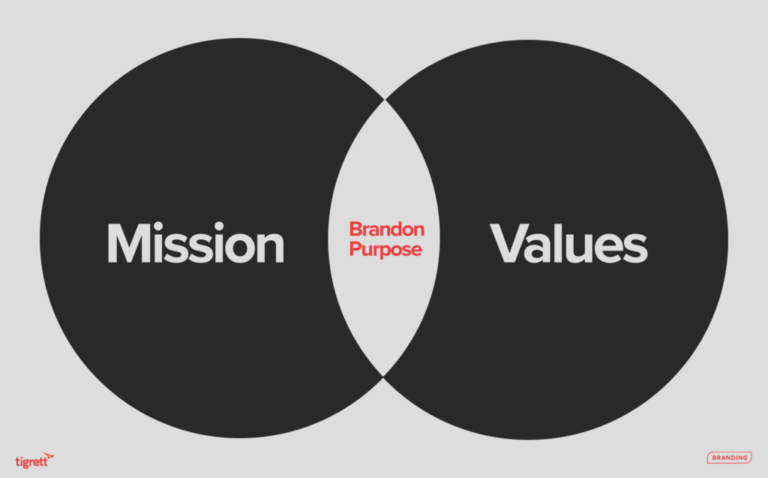
Your purpose is your “why” — the reason your brand exists beyond generating revenue. Your mission is the operational version: what you do, who you do it for, and how you do it differently. At Social Peak Media, our purpose is to give growing businesses the creative firepower and strategic clarity to compete above their weight class. That purpose shapes every service we offer and every client we take on.
If your purpose statement could belong to any competitor in your category, rewrite it.
2. Brand Vision
Vision answers where you’re going. It paints the future state your brand is working toward — and it matters as much internally as externally. A sharp vision statement aligns leadership, guides hiring decisions, and gives your team a north star when priorities compete.
3. Target Audience and Buyer Personas
Trying to reach everyone is the fastest way to connect with no one. Your brand strategy must define — with specificity — who your primary audience is, what they’re trying to accomplish, what’s getting in their way, and how they make decisions. In 2026, this goes deeper than demographics. Psychographics, buying triggers, content consumption habits, and channel behavior all factor into a useful persona.
The tighter your audience definition, the sharper your message. Sin chamullo.
4. Brand Positioning
Positioning is where your brand lives in the mind of your target buyer relative to every alternative — including doing nothing. It answers: why you, why now, why not someone else? A strong positioning statement is specific enough to exclude, not just include. If it doesn’t rule anyone out, it doesn’t stand for anything.
In competitive B2B markets, generic positioning is a liability. CMOs who inherited a vague “we help businesses grow” positioning know exactly what that costs in pipeline quality.
5. Brand Voice and Messaging
Voice is how your brand speaks — the personality, tone, and language patterns that show up consistently across every touchpoint. Messaging is what you say: the core narratives, value propositions, and proof points that move your audience from aware to convinced.
Both need to be documented. Not in a 40-page brand bible that nobody reads — in a working reference that your team, your agency, and your freelancers can actually use. The goal is consistency without rigidity.
6. Brand Values
Values are the principles that guide how your brand behaves when no one is watching. They’re not wall art. They’re decision filters. When a client request conflicts with your positioning, values tell you how to respond. When a content opportunity feels off-brand, values tell you why.
Buyers in 2026 are increasingly skeptical of performative brand values — the ones that appear in an “About Us” page and nowhere else. The brands that earn trust are the ones where values are visible in behavior, not just copy.
7. Competitive Differentiation
What makes you the right choice for your specific audience — not just a good choice in general? Differentiation isn’t about being better at everything. It’s about being meaningfully different in the ways that matter most to the buyers you’re trying to win.
This requires honest competitive intelligence. Know who you’re being compared to, understand where those alternatives fall short for your ideal customer, and build your brand narrative around that gap. That’s the kind of positioning that converts.
Brand Strategy Development in 2026: What’s Changed
The fundamentals haven’t changed. But the context has. Buyers are more informed, more skeptical, and more distracted than at any previous point. AI-generated content has flooded every channel, which means brands with a clear, consistent, human point of view have a meaningful edge.
CMOs and founders who are winning right now share a few patterns. They’ve invested in owned narrative — a distinct perspective on their category that they publish consistently. They’ve tightened their ICP rather than expanding it under revenue pressure. And they’ve aligned brand and demand generation so neither function operates in isolation.
The brands that struggle are the ones still treating strategy as a one-time deliverable rather than a living operating system. Markets shift. Audiences evolve. Your brand strategy needs a review cycle, not a shelf.
How to Pressure-Test Your Existing Brand Strategy
If you already have a brand strategy document somewhere — in a Google Drive folder nobody opens, or in a deck from the last rebrand — here’s how to pressure-test whether it’s actually working:
- Ask five people on your team to describe your brand positioning in one sentence. If you get five different answers, the strategy isn’t operationalized.
- Pull your last 10 pieces of content. Could they have been published by a competitor? If yes, your voice isn’t differentiated enough.
- Check your win/loss data. If buyers are confused about why you’re different, it shows up in late-stage deal conversations.
- Review your ICP definition. If it hasn’t been updated in 18 months, it probably doesn’t reflect the buyers you’re actually closing today.
Brand strategy that lives on paper but not in behavior isn’t strategy — it’s documentation. The goal is integration.
The Connection Between Brand Strategy and Revenue
This is where the conversation shifts for founders and CMOs who need to justify brand investment to a board or a CFO. Brand strategy isn’t a soft cost. It’s a compounding asset.
A clear positioning reduces sales cycle length because buyers arrive pre-qualified and pre-convinced. Consistent brand voice reduces content production costs because there’s less rework and guesswork. A documented messaging framework scales across channels, teams, and agency partners without losing coherence. These are measurable operational advantages.
The brands that treat strategy as a foundation — not a luxury — outperform on efficiency metrics, not just awareness metrics. That’s the case worth making internally.
For a deeper look at how brand strategy connects to demand generation, pipeline velocity, and content ROI, explore our CMO and Founder Growth Playbooks — built specifically for the leaders navigating these decisions.
Where to Start If You’re Building From Scratch
Start with audience, not aesthetics. Before you touch a logo, a color system, or a website, define who you’re building this for and what they need to believe to choose you. Every strategic decision downstream depends on that clarity.
Then work through the seven pillars in order. Purpose before positioning. Positioning before voice. Voice before content. Each layer informs the next, and skipping steps is how you end up with a beautiful brand that doesn’t convert.
Document as you go — but keep it usable. The output of brand strategy development should be a working reference, not a monument. If your team isn’t using it to make daily decisions, it needs to be simplified.
Ready to Build a Brand Strategy That Holds Up Under Pressure?
A brand that grows is a brand that’s been deliberately designed to grow — with a clear purpose, a defensible position, and a voice that earns trust at every touchpoint. That doesn’t happen by accident, and it doesn’t happen from a single brainstorm session.
At Social Peak Media, we work with CMOs and founders who are serious about building brands with long-term leverage. If you want a strategic partner who brings both the framework and the execution, let’s talk about what your brand actually needs right now.
“`