Developing E-commerce Websites for Sacramento Businesses
“`html
E-Commerce Website Development in Sacramento: What Actually Drives Sales in 2026
Most Sacramento businesses that come to us have the same problem: they built an online store, but it doesn’t sell. The site exists. Traffic trickles in. Conversions don’t follow. That gap between “we have a website” and “our website generates revenue” is exactly what professional e-commerce website development in Sacramento is designed to close.
Sacramento’s market is specific. Buyers here blend strong local loyalty with sharp digital expectations — they’ll compare you to national competitors in the same search session they use to find a neighborhood shop. Your store has to earn both clicks and trust, often at the same time.
This guide covers what a revenue-ready e-commerce site looks like in 2026, which platforms make sense for Sacramento businesses, and how the rise of AI-powered search changes what “being found” even means now.
Why E-Commerce Development Isn’t Just Web Design
There’s a real difference between a designer who builds pretty pages and a development partner who architects buying experiences. Features, platform choices, page speed, schema markup, checkout flow — every technical decision is either helping conversions or hurting them. For local Sacramento businesses competing against Amazon and direct-to-consumer brands, the margin for sloppy execution is thin.
Claro: the store has to look good. But it also has to load fast on a four-year-old Android, rank in Google’s AI Overviews when someone asks “best [product] shop in Sacramento,” and give a first-time buyer zero reasons to abandon the cart.
Core Features Every Sacramento E-Commerce Site Needs
Navigation That Gets Out of the Way
Customers won’t work to find your products — they’ll leave. Navigation should surface top categories within one click, a search bar should handle misspellings and synonyms, and the path from product page to checkout should have as few steps as possible. Cart abandonment in 2025 averaged over 70% globally; friction in navigation is one of the fastest ways to push that number higher for your store.
Mobile-First, Not Mobile-Friendly
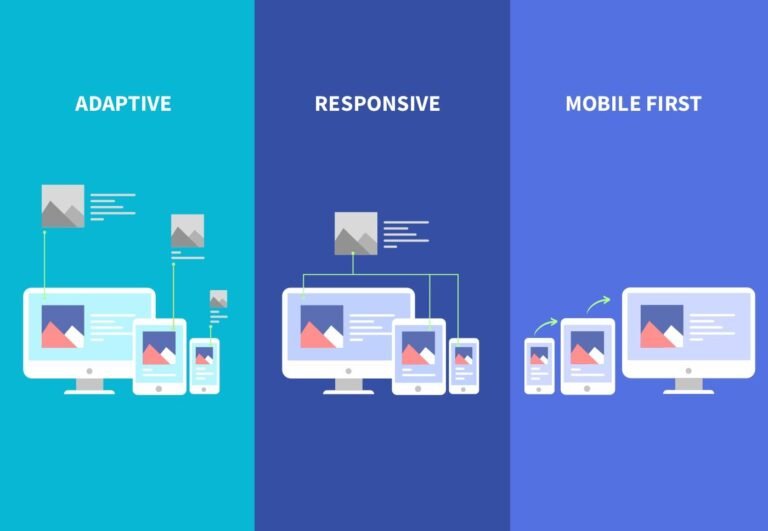
Mobile-friendly means it doesn’t break on a phone. Mobile-first means it was designed for the phone experience and scales up to desktop — not the other way around. With more than 60% of e-commerce traffic coming from mobile devices, this isn’t a checkbox item. Touch targets, thumb-zone navigation, one-tap payment options (Apple Pay, Google Pay), and sub-three-second load times are the baseline, not differentiators.
Product Pages That Answer Questions Before They’re Asked
Weak product pages are conversion killers. Strong ones include high-resolution images from multiple angles, short-form video where relevant, clear sizing or specification guides, real customer reviews, and structured data markup so search engines — including AI systems like Perplexity and ChatGPT — can pull your product details into answers directly.
That last point matters more than most Sacramento businesses realize. AI-powered search engines now surface specific product recommendations the same way they surface factual answers. If your product pages don’t have clean schema markup, you’re invisible to that layer of discovery.
Checkout Built to Close
Every extra field in your checkout form costs you conversions. Best practice in 2026: guest checkout by default, address auto-complete, multiple payment methods, a visible security badge, and a single-page or two-step flow. If you’re running WooCommerce or Shopify, this is largely configurable — but it requires intentional setup, not the out-of-the-box defaults.
Platform Selection: What Works for Sacramento Businesses
There’s no universal right answer here, but there are wrong ones. Platform choice should be driven by your catalog size, your team’s technical capacity, your budget, and your growth plans — not by what your cousin’s business uses.
- Shopify — Best for product-focused retailers who want fast setup, reliable hosting, and a strong app ecosystem. Lower technical overhead. Transaction fees apply unless you use Shopify Payments.
- WooCommerce — Best for Sacramento businesses already on WordPress or those who need deep customization. More control, more responsibility. Requires solid hosting and ongoing maintenance.
- BigCommerce — Solid middle ground for mid-market businesses with complex catalogs or B2B components. Built-in features reduce reliance on third-party apps.
- Custom builds — Warranted for businesses with genuinely unique requirements. Higher upfront investment, but full ownership of the experience. Not the right call for most small local retailers.
Sin chamullo: the platform matters less than the execution. A well-built WooCommerce store will outperform a poorly configured Shopify store every time.
Local SEO and AI Search: The 2026 Reality
Here’s what changed. Two years ago, ranking on Google for “e-commerce website development Sacramento” was primarily a traditional SEO play — title tags, backlinks, content clusters. That still matters. But now, a growing share of purchase-intent queries get answered directly inside ChatGPT, Perplexity, Claude, and Google’s AI Overviews. If you’re a Sacramento retailer, your customers may be asking an AI assistant which local shop carries what you sell.
Getting surfaced in those answers requires a different kind of optimization — one that combines structured data, clear entity signals (your business name, location, and category mentioned consistently across the web), authoritative content that AI systems can cite, and reviews on platforms those systems pull from. This is the intersection of GEO (Generative Engine Optimization) and AEO (Answer Engine Optimization).
For Sacramento e-commerce businesses specifically, this means your product pages and category pages need to answer specific questions clearly — not just describe what you sell, but address the who, what, where, and why in formats AI systems can parse and cite. Learn how we approach this for local businesses in our GEO + AEO pillar on ranking in AI search engines.
Performance, Security, and the Basics You Can’t Skip
Speed is a ranking factor and a conversion factor. A one-second delay in page load reduces conversions by roughly 7% — that’s not a hypothetical, it’s documented across hundreds of e-commerce studies. Core Web Vitals scores directly influence where you show up in Google. Sacramento businesses on shared hosting with unoptimized images and bloated plugins are leaving both rankings and revenue on the table.
Security is non-negotiable. SSL certificates are the floor, not the ceiling. PCI compliance for payment processing, regular vulnerability scans, and a backup strategy that runs automatically are the standard. A single breach can destroy the customer trust it took years to build — and in a community-driven market like Sacramento, reputation damage travels fast.
What to Look for in a Sacramento E-Commerce Development Partner
Not all agencies approach this the same way. When you’re evaluating development partners, the questions that matter are:
- Do they have measurable results from previous e-commerce builds — not just screenshots, but conversion rates and revenue outcomes?
- Do they understand local SEO and AI search, or are they still treating visibility as a pure Google-ranking exercise?
- Can they explain their approach to page speed, schema markup, and checkout optimization — or do they deflect to vague promises about “best practices”?
- What does post-launch support look like? A store that launches and gets no ongoing attention will degrade.
- Do they have experience with Sacramento-area businesses and the specific audience behavior in this market?
The right partner treats your store as a revenue system, not a design deliverable.
Ready to Build an E-Commerce Store That Actually Sells?
At Social Peak Media, we build e-commerce websites for Sacramento businesses that are engineered to convert — and structured to be found across Google, ChatGPT, Perplexity, and every AI-powered discovery layer that matters in 2026. From platform selection through launch and beyond, we stay in the work with you.
If your current store isn’t performing or you’re starting from scratch, let’s talk about what your market actually needs — not a template, a strategy built around your customers and your goals.
Get a free e-commerce strategy consultation →
— Jose Villalobos, Social Peak Media
“`